

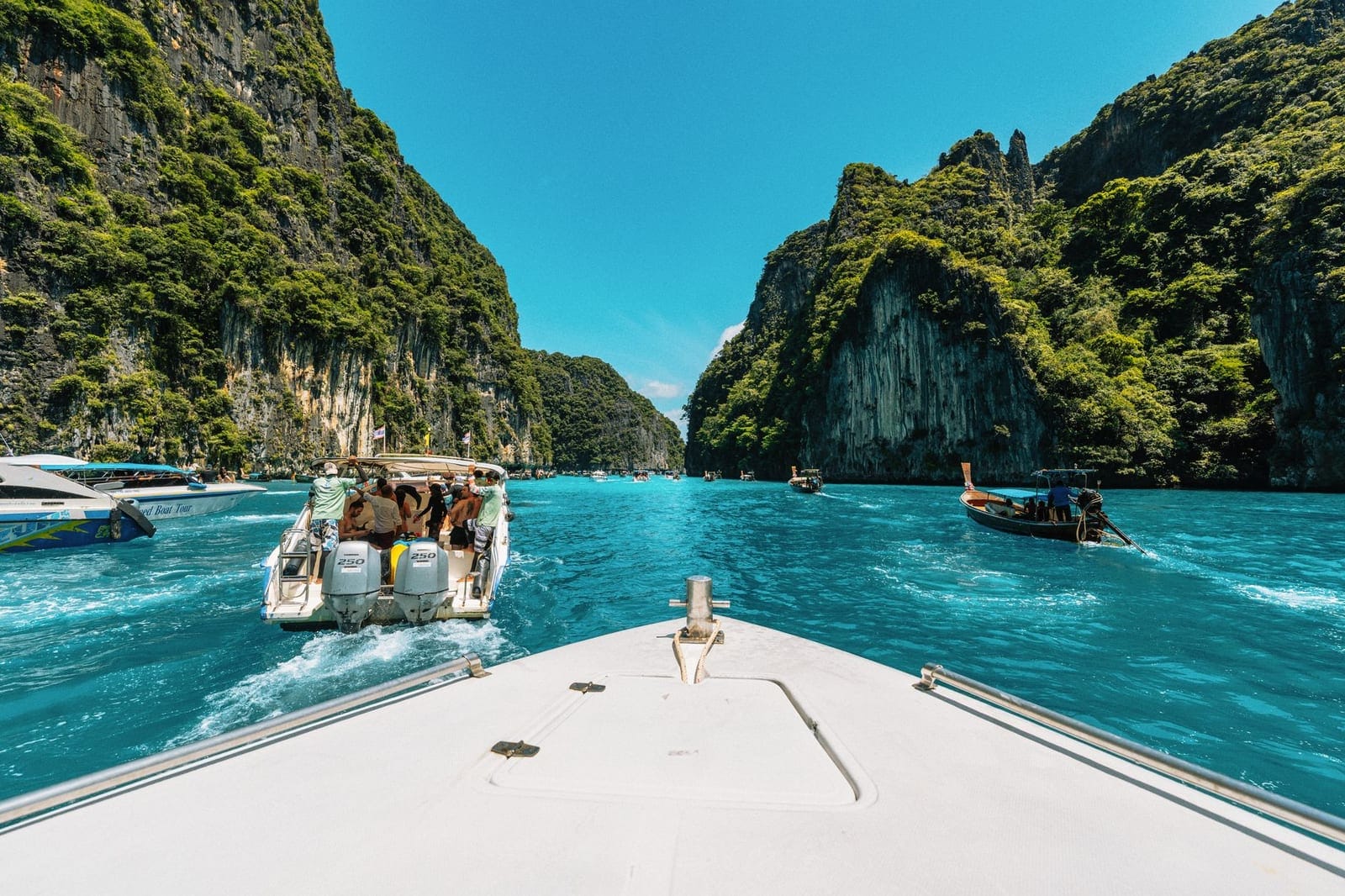
Short answer
Seasickness comes from repeated movement that confuses the inner ear, and the NHS advises sitting in the middle of the boat, looking at a fixed point such as the horizon, avoiding heavy meals and alcohol, and asking a pharmacist about tablets, which hyoscine hydrobromide needs at least 30 minutes before travel. On our tours the open-sea crossings to Phi Phi and the Similan Islands are the bumpiest, while Phang Nga Bay lies between Phuket and the mainland and the Krabi days have short boat rides. Bring a remedy if you need one.
Seasickness is a mismatch between your eyes and your ears
The NHS explains motion sickness as the result of repeated movements, such as moving up and down in a boat, that make the inner ear send different signals to the brain from those your eyes are seeing. The confusing messages make you feel unwell. The symptoms it lists are dizziness, feeling sick, being sick, headache, feeling cold and going pale, and sweating.
Two things follow. First, anything that lowers the movement or gives your eyes and ears the same message helps. Second, the NHS says there are things you can do to prevent it or relieve the symptoms. The advice below is built from the NHS and from what we know about our own boat days.
Which of our days is bumpiest, and which is calmer
On our Phi Phi and Maya Bay speedboat tour from Phuket, the crossing takes about an hour, and the operator warns that the ride can be bumpy in the open sea and suggests seasickness tablets for those who need them. Our Similan Islands day is a long day on a fast boat in the open sea, with about an hour and a quarter from Thap Lamu pier to the first snorkelling stop. For the open-sea days, treat a remedy as part of the packing list.
Phang Nga Bay lies between Phuket and the mainland, and Wikipedia describes it as a shallow bay with 42 islands. By geography it is less exposed than a crossing in the open sea, though the sea still changes by day, and we have no wave measurements to give. On our James Bond Island tour the boat stops at calm beaches, and on our Krabi tours the operator describes the boat rides as short and the beaches as calm.
Where to sit and what to look at
The NHS gives practical rules. To reduce motion, sit in the middle of a boat. Look straight ahead at a fixed point such as the horizon. Breathe fresh air if possible, close your eyes and breathe slowly, and try ginger as a tablet, biscuit or tea. For children, distract them by talking, listening to music or singing.
It also lists what not to do. Do not read, watch films or use electronic devices. Do not look at moving objects such as passing cars or rolling waves. Do not eat heavy meals or spicy foods, or drink alcohol, shortly before or during travel. In practice that means a light breakfast, a phone in the dry bag for the crossing, and your eyes on the horizon, not on the water beside the hull.
Tablets, patches and bands: what the NHS says
The NHS says you can buy remedies from pharmacies to prevent motion sickness: tablets, with dissolvable tablets available for children; patches, which adults and children over 10 can use; and acupressure bands, which it says do not work for everyone. It adds that a pharmacist will be able to recommend the best treatment for you or your child, so ask before the trip, not on the pier.
Its page on hyoscine hydrobromide, last reviewed on 26 August 2026, says the tablets are used for travel sickness including seasickness and should be taken at least 30 minutes before you travel. Common side effects include drowsiness, dizziness, blurred vision and a dry mouth. Its cinnarizine page, reviewed on 6 August 2026, says to swallow the tablets, best after eating, and lists drowsiness. Neither suits everyone; read the leaflet and ask a pharmacist.
The season matters more than the boat
A calm day in November and a rough day in July are different trips on the same boat. The UK Foreign Office says the rainy season generally runs from May to October and that boat accidents are usually due to overloading, poor maintenance and rough seas, particularly in the monsoon. On 19 May 2026 The Phuket News reported a Thai Meteorological Department forecast of waves of two to three metres in the upper Andaman Sea, with small boats advised to stay ashore.
A Krabi ferry company's seasonal guide describes November to February as the period of beautifully calm seas, and July to October as a time when offshore conditions can be choppy and schedules may adjust. Our Similan Islands tour runs only from 15 October to 14 May. On our tours, if the sea is unsafe, the operator moves the trip to another date or refunds it, which is better than a bad crossing.
Ferries and bigger boats are steadier, with trade-offs
If you are very prone, a bigger boat may suit better. Phuket 101, in a guide dated 12 April 2026, says ferries to Phi Phi take around 2 hours but are cheaper and more comfortable if you get seasick easily, while speedboats get you there in under an hour but bounce around in choppy water. Our guide to the ferry or the tour sets out the times and fares.
The trade-off is what you see. A ferry takes you to Tonsai Pier, not to Maya Bay, Pileh Lagoon or Bamboo Island. If your stomach is the main worry, compare our speedboat or big boat guide and ask us before you book. Our own details say that guests with back problems should consider a bigger boat, and the speedboat does not take pregnant women, infants under 1 year or guests over 70.
Children and a plan for the day
For children the NHS says dissolvable tablets are available, patches are for adults and children over 10, and a pharmacist can recommend the best treatment for your child. Hyoscine tablets are described for children from 4 years in its dosing pages, but check the pack and ask a pharmacist. Our Phi Phi tour takes children from 1 year old; see our guide to Phi Phi with kids.
A plan costs nothing: a light breakfast, a remedy taken in good time before the boat leaves at about 9:30 (hyoscine needs at least 30 minutes), a seat in the middle, eyes on the horizon, and water. Tell the guide early if you feel unwell. Then enjoy the swim stops: Pileh Lagoon and Bamboo Island are where the Phi Phi day is spent.
Practical checklist
- Ask a pharmacist about a remedy before the trip, and take it at the time the pack says; hyoscine needs at least 30 minutes.
- Eat a light breakfast and avoid heavy meals, spicy food and alcohol before and during the boat.
- Sit in the middle of the boat and look at the horizon, not at your phone or the waves.
- Pack ginger, water and a dry bag for your phone.
- Check the weather and the season: November to February is calmer, July to October choppier.
- If you are very prone, ask us about a calmer day or a bigger boat before you book.
Questions and answers
Where is the best place to sit on a speedboat to avoid seasickness?
The NHS advises sitting in the middle of a boat, where movement is reduced, and looking straight ahead at a fixed point such as the horizon.
Should I take seasickness tablets before a Phi Phi tour?
Our operator suggests tablets for those who need them. The NHS says hyoscine hydrobromide should be taken at least 30 minutes before travel and can cause drowsiness. Ask a pharmacist which remedy suits you.
Which of your tours has the calmest water?
The Krabi islands days, which the operator describes as having short boat rides and calm beaches, and the Phang Nga Bay day, whose boat stops at calm beaches. The sea still changes by day, so we cannot promise it.
Are ferries better than speedboats for seasickness?
Phuket 101 says ferries to Phi Phi take around 2 hours but are cheaper and more comfortable if you get seasick easily, while speedboats bounce around in choppy water. Ferries do not take you to Maya Bay.
What can children take for seasickness?
The NHS says dissolvable tablets are available for children and patches are for adults and children over 10. A pharmacist can recommend the best treatment for your child, so ask before the trip.
Is it safe to swim after taking a seasickness tablet?
The NHS lists drowsiness, dizziness and blurred vision as common side effects of hyoscine hydrobromide. Read the leaflet and ask a pharmacist. Our tours include a life jacket for snorkelling.