

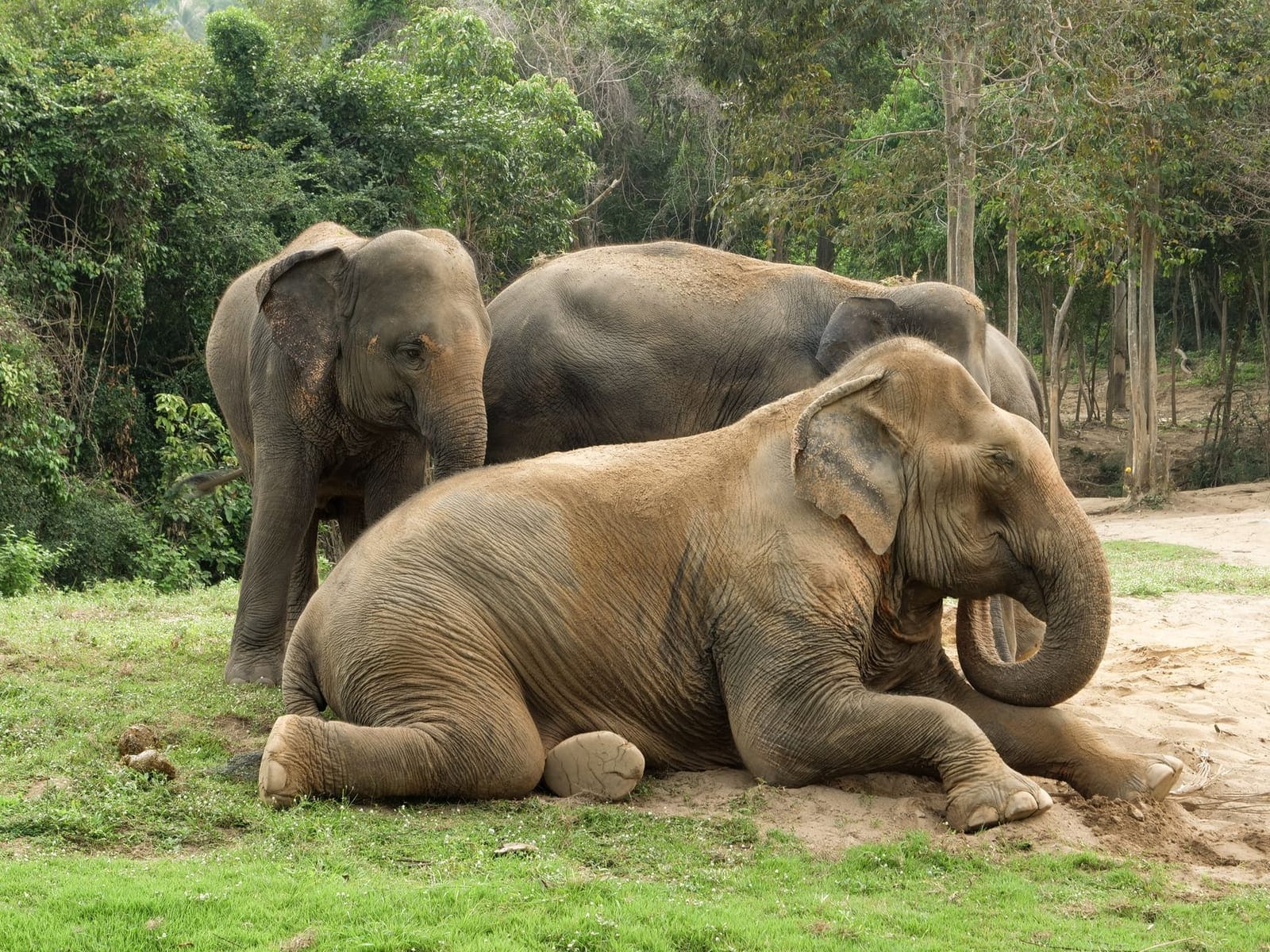
Short answer
An ethical elephant sanctuary in Phuket is one where visitors only watch: no riding, no shows and no direct contact. World Animal Protection scored observation-only venues 8.5 out of 10 in its 2026 report, against 5.16 for washing venues and 3.32 for riding venues, and its guide, reviewed in December 2025, lists Phuket Elephant Sanctuary as elephant-friendly. As of October 2026 our morning there is hands-off: no riding, no bathing and, since 1 April 2026, no feeding. Observation-only does not guarantee good welfare, so ask the questions below.
How do you tell an observation-only sanctuary from a riding or bathing camp?
Start with what visitors are allowed to do, because it is the one thing you can check before you book. World Animal Protection, an animal-welfare charity, sorts Thailand's elephant venues by the experience they sell: shows, riding, washing and observation only. In its 2026 report, observation-only venues scored 8.5 out of 10 on average, washing venues 5.16, riding venues 3.32 and show venues 3.05. Observation-only venues held about 7% of the country's tourism elephants.
Phuket has more than one kind. The report's own photographs include tourists washing an elephant on Phuket, and Wikivoyage's page for Chalong Bay lists elephant rides among the area's activities. So the word sanctuary settles nothing. The charity's 2026 guide says that names such as sanctuary or rescue centre do not guarantee high welfare, and that riding, bathing or touching elephants suggests they have been trained through cruelty. Use the activity list, not the name.
What do the charity's nine welfare checks mean when you stand there?
The 2026 report scored each venue on nine criteria, from 0 to 4 each: mobility, hygiene, environmental noise quality, daytime rest area, naturalness, social interaction, diet quality, visitor interaction intensity and animal management. The lowest average scores were for mobility, followed by the intensity of visitor interaction and diet quality. Researchers visited every venue in person between February 2024 and January 2025, mostly unannounced, so the scores rest on what they could see.
Several of these are visible to a visitor. The report found that more than half of all tourism elephants were kept on short chains during the day, and only a quarter could interact freely with other elephants when not chained. It says concrete floors can damage elephants' joints, that venues with shows averaged 83 dB of noise, and that venues near main roads or taking walk-in visitors tend to have larger, less predictable groups. Chains, concrete and loudspeakers are worth noticing.
Where does World Animal Protection place Phuket Elephant Sanctuary?
It lists the sanctuary as elephant-friendly. The charity's elephant-friendly tourist guide 2026, reviewed in December 2025, includes Phuket Elephant Sanctuary in its Thailand list. The 2026 report also names the sanctuary in Appendix 2, the list of venues that received the highest scores, 9 or 10 out of 10, in the 2024/25 assessment. The report says none of the venues on that list offer shows, riding or washing.
Read that with care. The charity says even a score of 10 only indicates best-practice captive conditions and does not mean those conditions are adequate for elephants. The assessment was a rapid one, based on researchers' visits, and not a direct measurement of any individual elephant's welfare. The list reflects Thailand in 2025. We have not inspected the sanctuary ourselves, and we claim no certification or welfare score for it.
What can you do at the sanctuary, and what not?
As of October 2026 our morning is observation only. There is no riding, no feeding and no bathing with the elephants. Our tour information says the sanctuary has been hands-off since 1 April 2026: you watch from a respectful distance, along the 500-metre canopy walkway and the forest trails, with a guide who leads you to wherever the elephants are that morning. The elephants choose what they do.
The sanctuary also offers no bathing or mud bathing, because people crowding around the elephants while they bathe stresses them, according to our tour information. What you do instead is watch a documentary, visit the on-site elephant hospital and see the elephants roam, forage and socialise on their own terms. The price, hours and booking rules are in our guide to the Phuket elephant sanctuary price.
Why did the sanctuary stop feeding?
Feeding is the most common close-contact activity in Thailand, and the charity wants it gone from venues that call themselves ethical. Its 2026 report found hand feeding offered at 92.2% of venues, including some observation venues that allow it only over a barrier. It says some leading observation venues have never allowed it, have dropped it or have announced they will stop. A footnote to the report's venue list says Phuket Elephant Sanctuary confirmed it was phasing out hand feeding from 1 April 2026.
The charity's 2026 guide records the same announcement: the sanctuary said it would phase out hand feeding by April 2026. The sanctuary's own reasons are not in the sources we read. What our tour information says is plain: since 1 April 2026 guests no longer feed the elephants, and the morning is built around watching. If you remember the sanctuary from earlier years or older reviews, check that this is the morning you want.
What does observation-only still not promise?
A good category is not a guarantee of good welfare. The report says observation-only venues still need space, natural food, other elephants and skilled mahouts. Social groups are more common at observation venues but not guaranteed, especially at small venues with only two or three elephants. It also says Thailand's captive elephants are still classed as livestock under laws dating from 1939, and that certification schemes are voluntary and ineffective.
The charity goes further: its view is that elephants' needs cannot be fully met in captivity, and its recommendations to travel companies include promoting genuine observation-only venues and responsibly conducted wild encounters. Our morning is the first, not the second. If that matters to you, ask us before you book, and we will pass on what the sanctuary tells us. If you accept a well-run observation venue as the best captive option, the questions below are the test.
Questions to ask any Phuket elephant venue, ours included
Ask whether visitors can ride, wash, feed or touch the elephants. Ask whether the elephants are chained in the day and what ground they stand on, whether there is loud music or a show, and whether the venue sits on a main road. Ask how many guests are in a group. The report says venues with scheduled visits and an educational session before the tour create a calmer setting, which benefits the elephants and may make people safer.
A good answer is specific. From our tour information, the answers we can give for our morning are: no riding, no feeding and no bathing; a documentary first; guided groups on a canopy walkway and forest trails; and elephants that choose where to be. For the same questions on a hands-on programme in another province, see our guide to an ethical elephant sanctuary in Chiang Mai. The tour page has the rest.
Practical checklist
- Look at the activity list first: riding, shows, washing, bathing, hand feeding or touching are all signs of close contact.
- Ask whether the elephants are chained in the day and what ground they stand on.
- Ask how many guests are in a group and whether there is a briefing before the visit.
- Do not rely on words such as sanctuary or rescue centre; ask for specifics.
- On our morning, expect watching only: no riding, no bathing and no feeding since 1 April 2026.
Questions and answers
Is Phuket Elephant Sanctuary an ethical sanctuary?
World Animal Protection lists it as elephant-friendly and names it among the highest-scoring venues of 2024/25. The charity also says even a top score only describes best-practice captive conditions. We claim no certification, so judge it by the questions above.
Can I touch, feed or bathe the elephants on your morning?
No. There is no riding, and since 1 April 2026 there is no feeding. The sanctuary offers no bathing or mud bathing either. You watch from a respectful distance and the elephants choose what they do.
Why is there no bathing with the elephants?
Our tour information says people crowding around the elephants while they bathe stresses them. World Animal Protection also advises visitors to avoid bathing and washing experiences and to watch from a distance.
Does the sanctuary have an official certification?
We claim none. The charity's 2026 report says certification schemes for Thai elephant venues are voluntary and ineffective, and that Thailand's welfare law has no enforceable elephant-specific standards.
Is this the only Phuket venue on the charity's list of top scorers?
No. The report's Appendix 2 names three Phuket venues among the highest scorers of 2024/25, this sanctuary being one. We only run the morning at Phuket Elephant Sanctuary and cannot speak for the others.