

Short answer
World Animal Protection calls a venue elephant-friendly when visitors only watch: no riding, no shows and no direct contact with the elephants. It advises against bathing, and its 2026 report scored observation-only venues 8.5 out of 10, washing venues 5.16 and riding venues 3.32. Our Chiang Mai tour has no riding; its programme is a talk about the elephants, feeding, a walk and a river bath with the mahouts. Below are the charity's criteria and the questions to ask any venue, so you can choose the day that fits you.
What does World Animal Protection say an elephant-friendly venue is?
World Animal Protection is an animal-welfare charity that has monitored Thailand's elephant venues for 15 years. Its public guidance is short. A venue is elephant-friendly when it offers no rides, no shows and no direct contact between visitors and elephants. In a guide published on 14 September 2016 it adds that elephants should live in a wild or semi-wild setting day and night, that real sanctuaries do not breed elephants, and that visitors should be given accurate information.
Its advice for travellers, published on 16 January 2024, lists the red flags: riding, shows, selfies and touching, and close contact with young elephants. The charity's answer is to choose a place where visitors watch elephants from a distance. In its 2026 report that idea is called observation-only, and those venues, where elephants can explore, forage and live in social groups, received the highest welfare scores.
What does the charity say about bathing?
It advises against it. The 2024 guide says that a venue which lets visitors bathe and ride elephants is not treating them responsibly. In a January 2026 article on the subject the charity argues that bathing looks like a gentler choice than a ride, but that the contact is stressful for the elephants and risky for people. It says captive elephants avoid close contact with strangers, and that at washing venues they take part because of food rewards, punishment and routine.
The 2026 report defines washing as visitors washing or bathing with an elephant in a river or lake, or with buckets, sometimes after time spent preparing food or walking with the elephants. The charity says elephants do not need visitors to wash them, and that animals made safe for visitor contact are trained through punishment. It also records that in 2024 and 2025, 54% of Thailand's tourism elephants were at venues offering washing or care-taking activities.
Are all washing venues the same?
No, and the charity says so. In the 2026 report, venues that offer washing scored 5.16 out of 10 on average, against 3.32 for riding venues and 8.5 for venues that only offer observation. The report explains that some washing venues were remote, took small groups and let the elephants live in a small herd with fewer chains, while others sat beside roads and ran short washing sessions all day, and were no better than riding or show venues.
The report also gives a caution in the other direction. A venue that offers only observation does not automatically guarantee good welfare, because the elephants still need space, natural food, other elephants and skilled mahouts. And it says the fall in riding and shows has not lifted overall welfare scores much, because the activities that replaced them, such as washing and hand feeding, keep similar levels of restriction and human control.
Is there an official label for an ethical sanctuary?
No label settles the question. The report says that Thailand's welfare law is broad but has no enforceable standards for elephants, that captive elephants are still classed as livestock under laws dating from 1939, and that certification schemes are voluntary and ineffective. It also says words such as ethical, rescue centre and sanctuary are mostly impossible for tourists to check. The practical answer is to ask specific questions and to read what a programme actually does.
Change is possible, and Chiang Mai has an example. In May 2018 the charity announced that Happy Elephant Valley, working with a travel-industry coalition, planned to end tourist bathing and feeding, so that the elephants could roam, graze and bathe in rivers while visitors watched from a distance. We have not checked how that venue operates today, so read it as an example of the shift and not as a recommendation.
What exactly does our Chiang Mai tour include?
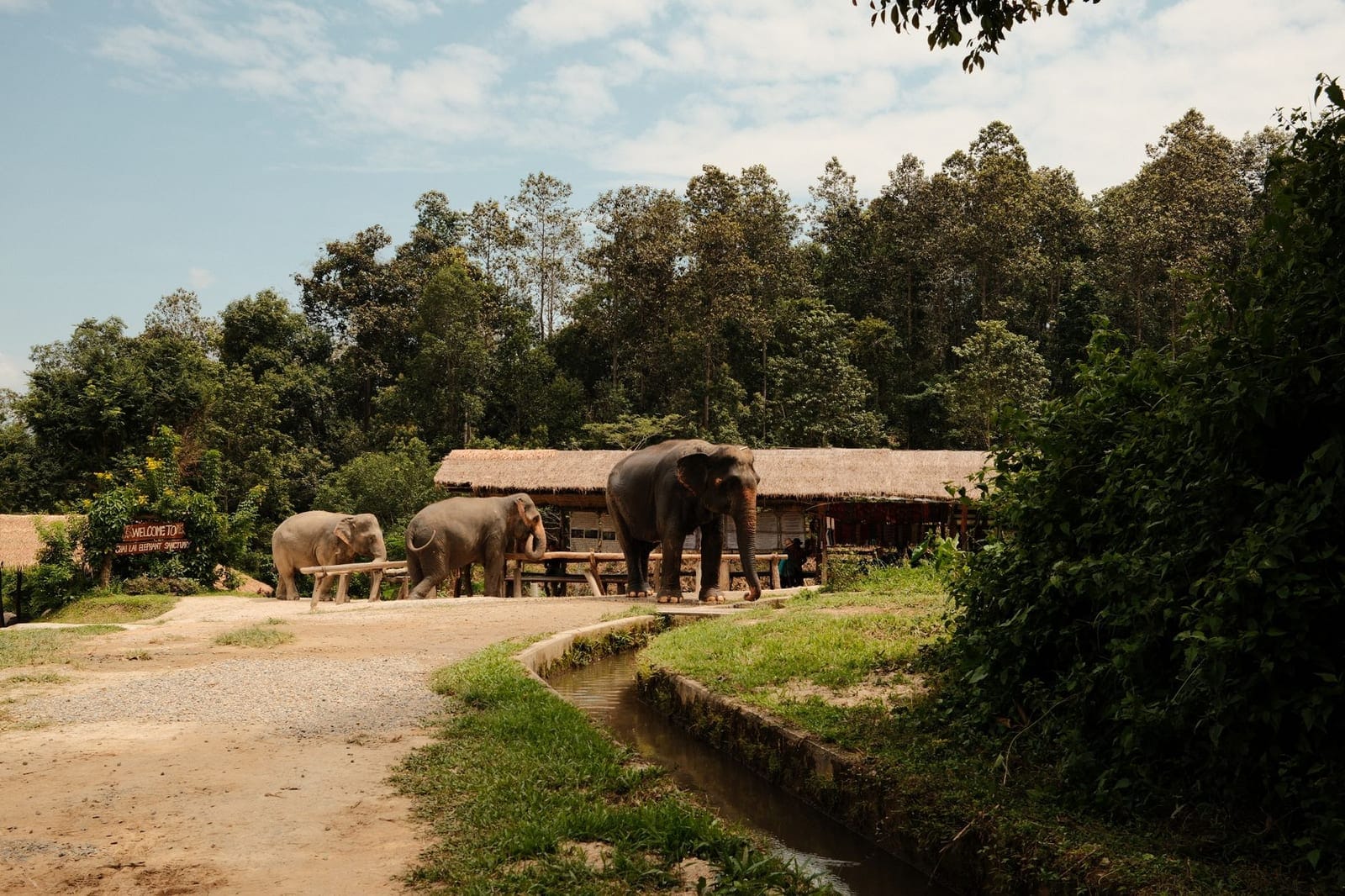
On our Elephant Sanctuary and Doi Inthanon tour the elephant part of the day is a talk about the elephants, feeding them, a walk with them and a bath in the river with the mahouts, followed by lunch at the sanctuary. There is no elephant riding. The tour is a small-group day tour, and the order of the day is in our tour schedule.
In the charity's terms, feeding, walking with and bathing elephants count as close contact, so this is a hands-on programme rather than an observation-only visit. We do not claim a certification or a welfare score for the venue. If you want to know more about the elephants' day, such as chains or group sizes, ask us before you book and we will pass on what the venue tells us.
Questions to ask any elephant sanctuary before you pay
The sources suggest questions that work for any venue. Are visitors allowed to ride, or to see shows? Are the elephants chained during the day? The 2026 report found that more than half of Thailand's tourism elephants were on short chains in the daytime. Does bathing take place in a river or in a concrete pool beside a road? How many guests are in a group? Are young elephants offered for visitors to touch, which the charity lists as a red flag?
A good answer is specific. A vague reply that the elephants are happy, or a badge you cannot check, tells you little, and the price will not answer these questions either. Our price guide for a Chiang Mai elephant sanctuary compares programmes by what they include and not by cost alone.
Who our Chiang Mai tour suits
Book it if you are comfortable with feeding, a walk and a river bath, you do not want any riding, and you would like elephants and Doi Inthanon in one day. Our reasons to book this tour set out what the rest of the day offers, from the pagodas to the waterfall trail.
If you prefer to only watch elephants, tell us when you write: this programme is hands-on, with feeding, a walk and a river bath. The charity's 2026 report lists the venues it scored highest in an appendix, free to read on its website, and the questions above work for any of them. Either way, you will know what the day involves before you pay.
Practical checklist
- Decide first whether you want observation only or are comfortable with close contact.
- Ask any sanctuary whether visitors ride, bathe or feed the elephants, and whether the elephants are chained in the day.
- Ask where the bathing takes place and how many guests are in a group.
- On our tour, expect feeding, a walk and a river bath, with no riding.
- Do not rely on words like ethical or sanctuary alone; ask for specifics.
Questions and answers
Is there elephant riding on your Chiang Mai tour?
No. There is no riding on this tour. The elephant programme is a talk about the elephants, feeding, a walk and a bath in the river with the mahouts, followed by lunch at the sanctuary.
Is the sanctuary certified or approved by an animal-welfare organisation?
We do not claim a certification or approval for the venue. World Animal Protection says certification schemes in Thailand are voluntary and do not work well, so the questions in this guide are a better test for any venue, ours included.
Does World Animal Protection approve of elephant bathing?
No. Its guidance advises avoiding riding, shows and bathing, and recommends venues where visitors only watch. In its 2026 Thailand report, washing venues scored 5.16 out of 10 on average, against 8.5 for observation-only venues.
What is an observation-only elephant venue?
A place where visitors watch elephants without touching, feeding or riding them. The charity found that these venues held about 7% of Thailand's tourism elephants in 2024 and 2025 and scored highest, but says observation alone does not guarantee good welfare.
Do the elephants on your tour take part in shows?
The programme on our tour is a talk about the elephants, feeding, a walk and a river bath with the mahouts; shows are not part of it. Ask us on WhatsApp before you book if you want to know more about the venue.