

Short answer
Phuket Old Town is small enough to walk in a morning. Its heritage streets include Thalang, Phang Nga, Krabi, Dibuk and Yaowarat, lined with Sino-Portuguese shophouses from the tin-mining boom. Start at the Thai Hua Museum on Krabi Road (9 am to 5 pm, closed Mondays, 200 baht, according to Phuket 101), then walk to Thalang Road and Soi Romanee and look into the small shrines. Thalang Road closes to traffic for the Sunday walking street market, which Phuket 101 lists from 4 pm or 5 pm to 9 pm.
Where the Old Town is and why it looks the way it does
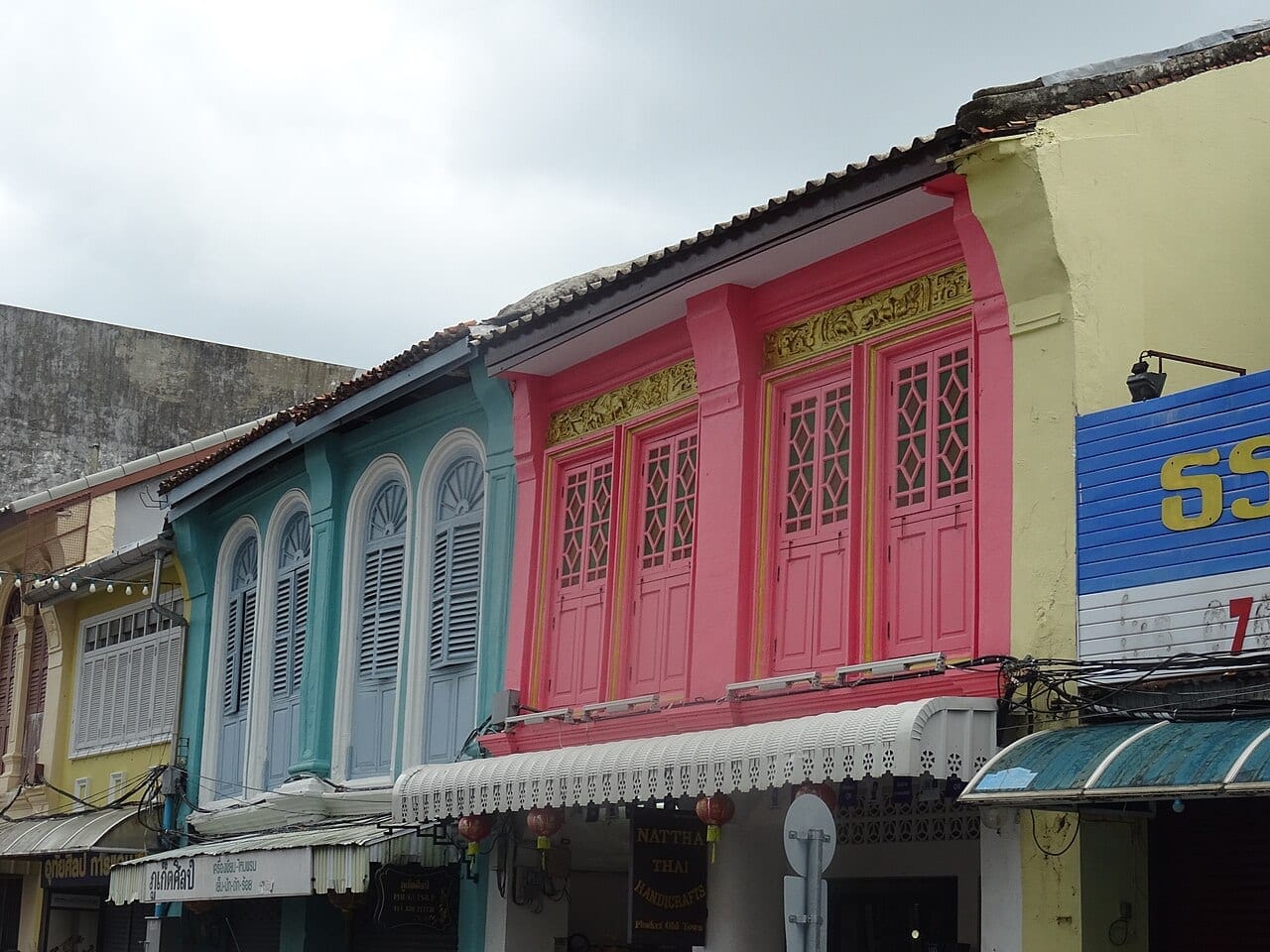
Wikipedia says Phuket Old Town has heritage buildings in ten streets, among them Thalang, Phang Nga, Krabi, Dibuk and Yaowarat, and that the area covers about 2.7 square kilometres. The style is called Sino-Portuguese: a one or two-storey building with a narrow front and great depth, with tiles, doors and perforated windows that mix Chinese and European detail. The houses date from the tin-mining boom, when Phuket made its money from tin.
The Tourism Authority of Thailand (TAT), in a 2015 feature, said the narrow fronts hide homes that can stretch back more than 50 metres, and that many shophouses are linked by verandas that keep walkers out of the sun and the rain. The same feature said Old Phuket Town can easily be explored in a morning. That is still a fair planning figure, and the route below fills it.
A one-morning route: museum, shrine, Thalang Road, Soi Romanee
TAT's 2015 feature suggests starting at the Thai Hua Museum on Krabi Road, and the order works. Phuket 101 says the Shrine of the Serene Light is a few minutes away on foot, reached through a narrow passage between shophouses off Phang Nga Road. From there you cross to Thalang Road, which Phuket 101 calls the most famous street of the historic quarter, and on to Soi Romanee, the short lane that runs from Thalang Road to Dibuk Road.
None of our sources gives a total walking distance, so treat this as an easy loop of a few streets with coffee stops. Wikivoyage describes a walking tour of Dibuk, Phang Nga, Yaowarat, Thalang and Krabi roads as easy, although it says Phuket Town as a whole is too big to cover comfortably on foot. Start early: the 1991–2020 normals for Phuket give a mean daily maximum of 33.0 to 34.4 degrees Celsius from January to April.
Thalang Road and Soi Romanee: the photogenic core
According to Phuket 101, Thalang Road became the first street in Phuket to bury its overhead cables, in 2010, and the restored shophouse fronts then came into view; cafés, boutiques and guesthouses followed. The covered walkways in front of the shophouses give shade by day. The guide adds that the old Chinese pharmacies and hairdressers are working businesses, so ask before you point a camera inside a shop.
Soi Romanee is about 125 metres long, Phuket 101 says, and runs from Thalang Road to Dibuk Road. The guide says it was the gambling and red-light district of Phuket Town during the tin boom, was abandoned when the mines closed, and now holds coffee shops and guesthouses. It is one of the most photographed lanes in town, and Phuket 101 recommends early on a weekday morning, before the crowds arrive.
Shrines worth a short stop
Phuket 101 says Put Jaw Shrine, also called Kuan Im Teng, is the oldest Chinese shrine in Phuket Town, dedicated to Guan Yin, and open from 6:30 am to 7 pm. It says the shrine came out of a renovation in August 2026. Jui Tui Shrine is next door, but the same guide warns it is a long walk from Thalang Road, so plan it as a separate leg by taxi or on your way somewhere else.
The Hainan Shrine on Thalang Road dates from 1910, when more than 180 first-generation Hainanese immigrants pooled their money to buy the building as a shelter for new arrivals, according to Phuket 101. It is easy to miss behind a bright red entrance. The Shrine of the Serene Light on Phang Nga Road was built in 1891 as a family shrine. Dress modestly, behave as in any place of worship, and see our Vegetarian Festival guide for these shrines in October.
Thai Hua Museum: the best hour indoors
Phuket 101, updated in September 2026, describes the Thai Hua Museum as a restored 1934 Sino-Portuguese mansion on Krabi Road that was the first Chinese-language school on the island. The museum opened in 2010 and has 13 themed rooms across two floors. Its hours are 9 am to 5 pm, closed Mondays, and entry is 200 baht, with a further 200 baht for a photo pass. The guide says a visit takes about an hour.
TAT's 2015 feature called the exhibitions thoughtfully arranged, with excellent information in English. Phuket 101 adds that the building is air-conditioned, is usually quieter after 2 pm, and has a room on the origins of the Vegetarian Festival in 1825. Prices and hours change, so treat these as the guide's figures from September 2026 and confirm them at the door, especially if your only free day is a Monday.
The Sunday walking street market on Thalang Road
Every Sunday evening Thalang Road closes to traffic for the walking street market that locals call Lard Yai, the Big Market. Phuket 101, updated on 30 September 2026, gives the hours as 4 pm to 9 pm, often later, although another list from the same guide says 5 pm, so aim for late afternoon. It says the market began in late 2013, measures about 360 metres, and has since spread onto Phang Nga Road, with food stalls, handmade goods and street performers. It advises going just before sunset, before the crowd peaks.
If rain starts, Phuket 101 points to the Oasis Thalang, a 150-metre air-conditioned covered passage between Thalang Road and Dibuk Road, with stalls and a few tables. The market is a separate plan from a morning in the Old Town, because the shophouse cafés and shops are what you see by day. For other nights and other markets across the island, see our Phuket night markets guide.
How the Old Town fits our half-day city tour
Our Phuket half-day city tour is from $25 per person, with hotel pickup at about 8:00 to 9:00 am, and lasts about 4 to 5 hours. It ends with a stop on foot around Thalang Road to see the shophouses, cafés and street art, with time for a coffee or lunch. Each stop on the tour takes about 15 to 60 minutes, and entrance fees or donations, if any, are paid on the day.
That is a taste of the Old Town, not the whole of it. The tour's itinerary does not list the Thai Hua Museum, and the Sunday market runs in the evening, so if either matters to you, go on your own on a suitable day. Our travel guide to the tour has the route stop by stop, and the city tour price guide lists what you pay on the spot.
When to go, and what to do if it rains
The World Meteorological Organization's 1991–2020 normals for Phuket, as tabulated by Wikipedia, give February 24.0 mm of rain as the driest month and September 350.4 mm as the wettest, with October at 336.0 mm over 19.4 rainy days. The Old Town is mostly outdoors, so December to March is the easiest season. In a downpour, the museum, the covered passage and the cafés are your shelter; see our rainy day guide.
The festival season is a special case. TAT's 2015 feature said one of the best times to walk the Old Town is during the local Vegetarian Festival, when every house is decorated. Phuket 101 warns that roads on a procession route close while the parade passes, so allow extra time for any drive through town. Dates for 2027 are in our festival guide.
Practical checklist
- Start early and pick a weekday if you want quiet streets; Phuket 101 likes Soi Romanee early on a weekday morning.
- Check that the Thai Hua Museum is open: 9 am to 5 pm, closed Mondays, 200 baht plus 200 for a photo pass.
- Plan the Sunday walking street market for late afternoon (4 pm or 5 pm start, to about 9 pm) and go just before sunset.
- Dress modestly and quietly in the small shrines, and ask before photographing inside shops.
- Allow a separate leg for Jui Tui Shrine; it is a long walk from Thalang Road.
- Carry water, a hat and a light rain jacket.
Questions and answers
How long does Phuket Old Town take to walk?
TAT's 2015 feature said Old Phuket Town can easily be explored in a morning. With a museum visit and a coffee stop, plan about half a day.
When is the Phuket Sunday walking street market?
Phuket 101 gives every Sunday from 4 pm to 9 pm, often later, on Thalang Road and Phang Nga Road, although one list in the same guide says 5 pm. It advises arriving just before sunset to beat the crowd.
How much is the Thai Hua Museum?
Phuket 101 lists 200 baht entry plus 200 baht for a photo pass, with opening hours of 9 am to 5 pm and a closure on Mondays. Check at the door, because prices change.
Is Soi Romanee worth the walk?
It is short, about 125 metres, so it takes minutes. Phuket 101 says it was once the red-light district and is now one of the most photographed lanes, best early on a weekday.
Does the half-day city tour include the Old Town?
Yes. The tour ends with a walk around Thalang Road with time for a coffee or lunch. It does not list the Thai Hua Museum, and the Sunday market is in the evening.