

Short answer
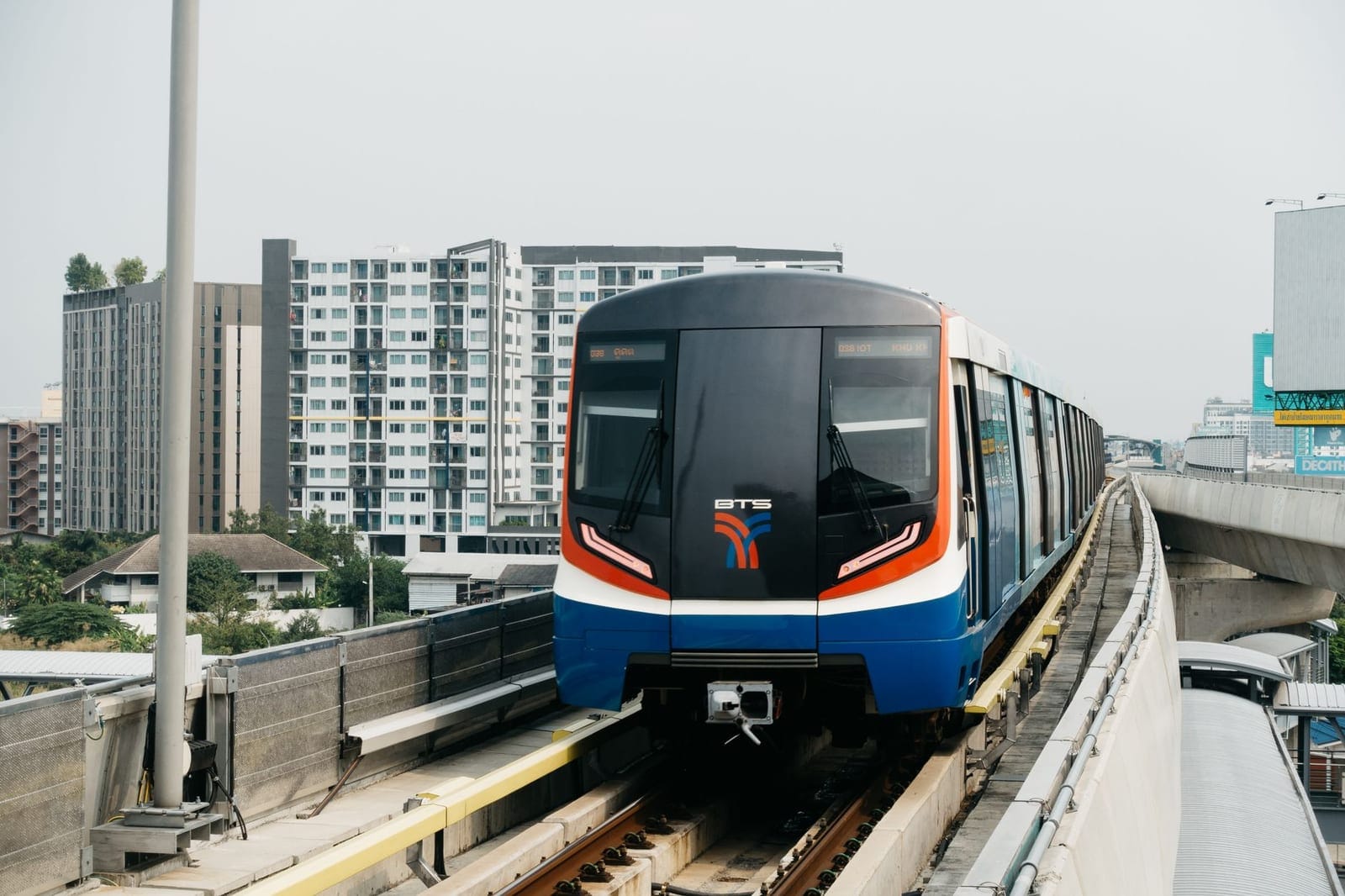
A BTS Skytrain ride on the core Sukhumvit and Silom lines costs 17 baht for one station and 47 baht for eight stations or more, according to The Thaiger's report of the January 2023 increase, and a one-day pass is 150 baht. The MRT Blue Line charges 17 to 44 baht from 3 July 2026. The 20-baht flat fare is not what visitors pay in October 2026: a new flat fare of 17 to 45 baht is a plan targeted for the start of 2027. Contactless bank cards work on the MRT but not yet on the BTS.
BTS fares: 17 baht for one station, 47 baht for eight or more
The BTS Skytrain's own lines, Sukhumvit from Mo Chit to On Nut and Silom from National Stadium to Saphan Taksin, charge 17 baht for one station and 47 baht for eight stations or more since the increase of 1 January 2023, according to The Thaiger's report of the operator's announcement. The same report put the one-day pass at 150 baht, and Wikivoyage gives the same price for the pass. The operator's page lists single-journey cards, one-day passes and Rabbit cards as its ticket types.
The extensions run by the city are priced separately. From 1 November 2025, according to The Thaiger's report of the city's announcement, trips within Mo Chit to Khu Khot, Bang Chak to Samut Prakan and Pho Nimit to Bang Wa start at 17 baht and are capped at 45 baht, and a trip across both the main and extended sections costs at most 65 baht. Before then the extensions had a flat 15-baht fare. Children and students under 23 get 30% off the extension fares, and passengers aged 60 and over 50%.
MRT fares: the Blue Line from 17 to 44 baht
The Thaiger reported that the MRT Blue Line's maximum fare drops by one baht on 3 July 2026, after a Royal Gazette notice of 26 May, so the range is now 17 to 44 baht. Six stations cost 29 baht, eight cost 34, ten cost 39 and twelve or more cost 44, while the fare for one to five stations is unchanged. The same notice made children up to 120 centimetres tall travel free and gave passengers aged 60 and over a 50% discount.
The suburban lines are cheaper at the bottom end. The Thaiger reported in September 2025 that Red Line fares range from 12 to 42 baht and Purple Line fares from 14 to 42 baht, and in May 2026 that the Purple Line's range would stay unchanged. The Red Line is the one that serves Don Mueang Airport, and our Don Mueang to city guide shows the fares from there.
How to pay: Rabbit card, single tickets and contactless
Wikivoyage says the BTS, the MRT and the State Railway lines each have their own fare system, so you need a separate ticket or stored-value card for each network. The BTS's own page says the one-trip ticket machines that take only coins accept 1, 2, 5 and 10 baht coins, and that the larger machines accept coins, banknotes and QR codes. Have coins ready, because Wikivoyage notes that queues form at the machines that take notes.
Wikivoyage gives the price of a new Rabbit card as 200 baht, including 100 baht of stored value and a non-refundable fee of 100 baht, and says your passport is required to buy one. It says contactless Mastercard and Visa taps work at the gates of all MRT and State Railway lines but not the BTS. The Thaiger reported in June 2026 that the BTS Green Line must upgrade its Rabbit card system to accept contactless bank cards before the planned common fare.
Is the BTS one-day pass worth 150 baht?
Only if you ride a lot. Our own arithmetic on the fares above: the 150-baht pass pays for itself from four rides at the 47-baht maximum, or nine rides at the 17-baht minimum, and a typical hop across the middle of the network falls between those. If your day is two or three rides, single tickets or a Rabbit card cost less. The pass is for a day of hopping between sights, not for a hotel-to-sight round trip.
Check the last train before a late night. The BTS operator's timetable page gives service hours of 05:00 to 01:00 and says the last train from Siam to all stations leaves at 00:02, and to Samrong, Ha Yaek Lat Phrao, Bang Wa and National Stadium at 00:15. Wikivoyage describes the whole rail network as running roughly from 06:00 to midnight, so use the operator's page for the exact times before you plan a late return.
The 20-baht flat fare: what happened to it
A 20-baht flat fare is not what visitors pay in October 2026. The Thaiger reported that a 20-baht fare began on the Red Line and the Purple Line on 16 October 2023, and in September 2025 that the pilot was due to end on 30 September, with Red Line fares reverting to 12 to 42 baht. In October 2025 The Thaiger reported that the new prime minister had halted the wider 20-baht policy that the previous government proposed for all lines, leaving its future uncertain.
In June 2026 the transport minister set out a new plan: a flat fare of 17 to 45 baht per journey, with the start of 2027 as the target, collected by the Mass Rapid Transit Authority across all lines including the Airport Rail Link, according to The Thaiger. It is a plan, not yet a rule. Until it takes effect, budget on the distance fares above and check each operator's page before you travel.
Which line goes where: the sights, in one paragraph
Wikivoyage says the Sukhumvit and Silom lines meet at Siam, that the Sukhumvit Line passes Victory Monument and Chatuchak Weekend Market, and that the Silom Line passes Patpong and the river. For Khao San Road it suggests the Silom Line to Saphan Taksin and then the Chao Phraya Express Boat from Sathorn Pier to Phra Arthit. The BTS meets the MRT at Bang Wa, Sala Daeng, Asok and Mo Chit.
On the MRT, Wikivoyage says Sanam Chai station is near Wat Pho and the Grand Palace, Wat Mangkon gives access to Yaowarat, and Kamphaeng Phet is the stop for the weekend market, one stop beyond Chatuchak Park. Our guides to the Chao Phraya Express Boat and the Chatuchak weekend market cover those trips.
Using the BTS around our night tuk-tuk food tour
Our Bangkok night tuk-tuk food tour, from $40 per person, meets at about 5:30 pm at a central point near a BTS station, confirmed with your booking. The group rides open tuk-tuks past the Grand Palace and Wat Pho, stops at Wat Arun, the Giant Swing and the flower market, and eats a street-food meal and dessert on Yaowarat Road. Hotel pickup is possible at extra cost; ask on WhatsApp.
The tour ends in Chinatown at about 9:30 pm, not at the meeting point, so plan the way back. Taxis and ride-hailing apps are easy to find there. Chinatown is not on the Skytrain, but Wikivoyage says the MRT's Wat Mangkon station gives access to Yaowarat, and trains run until around midnight, so you can also go home by metro. Our Bangkok taxi prices guide shows what a ride should cost.
Practical checklist
- Budget 17 to 47 baht per BTS ride on the core lines and 17 to 44 baht on the MRT Blue Line.
- Buy a Rabbit card or single tickets for the BTS, and keep coins ready for the machines.
- Use a contactless bank card on the MRT and State Railway lines, but not on the BTS.
- Buy the 150-baht day pass only if you plan about four long rides or more.
- Check the operator's last-train times before a late night out.
- Plan the ride home from Chinatown before the night tuk-tuk food tour.
Questions and answers
How much is the BTS fare in Bangkok?
On the core Sukhumvit and Silom lines, The Thaiger reports 17 baht for one station and 47 baht for eight stations or more since January 2023. The city's extensions are 17 to 45 baht, and a trip across both sections costs at most 65 baht.
How much is the MRT Blue Line fare?
The Thaiger reports a range of 17 to 44 baht from 3 July 2026, down one baht from 45. Six stations cost 29 baht, eight cost 34, ten cost 39 and twelve or more cost 44.
Can you pay with a contactless card on the BTS?
Not yet, according to Wikivoyage. Contactless Mastercard and Visa work on the MRT and State Railway lines. The Thaiger reported in June 2026 that the BTS Green Line must upgrade its system to accept them.
Is there a 20-baht fare for tourists?
No. The 20-baht fare on the Red and Purple lines was due to end on 30 September 2025, and the wider scheme was halted. A 17 to 45 baht flat fare is a plan targeted for the start of 2027.
How much is a Rabbit card?
Wikivoyage says a new Rabbit card costs 200 baht, including 100 baht of stored value and a 100 baht non-refundable fee, and that you need your passport. The BTS also sells single-journey cards and one-day passes.
When does the last BTS train leave?
The operator's timetable page gives service hours of 05:00 to 01:00. The last train from Siam to all stations leaves at 00:02, and to Samrong, Ha Yaek Lat Phrao, Bang Wa and National Stadium at 00:15.