
Short answer
Yi Peng, Chiang Mai's lantern festival, coincides with Loy Krathong, which Wikipedia's schedule puts on 24 November 2026. We found no official 2026 programme yet, so check the Tourism Authority of Thailand and the province in November. The rules are strict: according to the Nation and Wikipedia, releasing sky lanterns is banned in six Chiang Mai districts, including the city itself, because of the airport, and an unauthorised release risks up to five years in prison and a fine of up to 200,000 baht. Tourists usually join ticketed releases outside the city.
Yi Peng and Loy Krathong are one festival on one full moon
Wikipedia explains that Yi means "two" and peng a full-moon day: Yi Peng is the full-moon day of the second month of the Lanna calendar, which is the 12th month of the Thai calendar. That is why it falls on the same night as Loy Krathong, when Thais float krathong on rivers. Yi Peng is the northern, Lanna part, with sky lanterns, hanging lanterns and merit-making at temples.
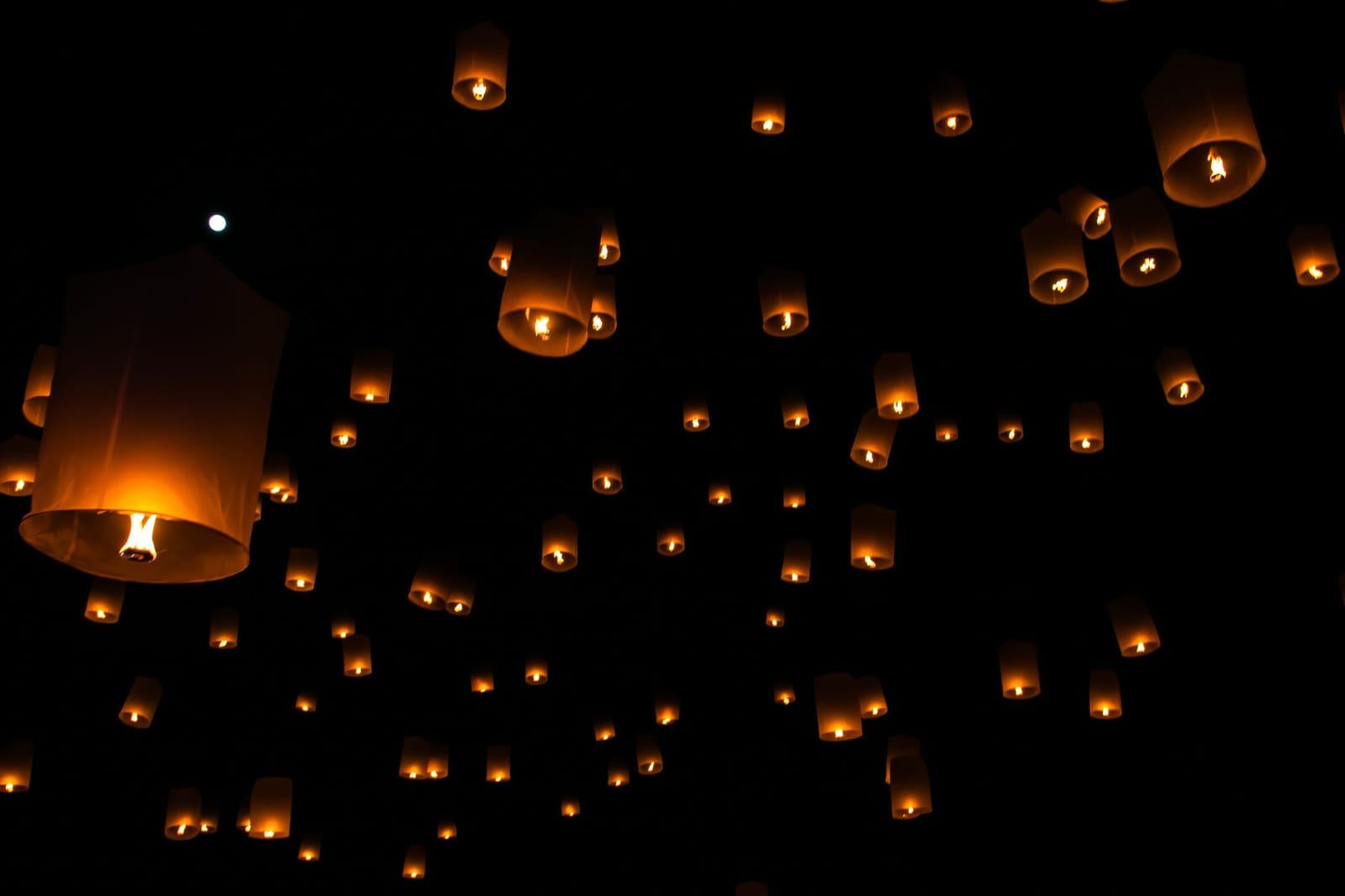
The Tourism Authority of Thailand wrote in July 2024 that the biggest and best-known Yi Peng event takes place in Chiang Mai, where colourful lanterns hang outside homes and temples, sky lanterns are released and locals in traditional Lanna clothing join parades. The same release said Yi Peng was recognised as a World Night View Heritage site, and that guidelines now set the times and places for releasing sky lanterns.
The 2026 dates: the full moon is on 24 November
Wikipedia's schedule of Loi Krathong puts the 2026 festival on 24 November 2026. Yi Peng follows the same moon, and Wikivoyage says the festival lasts three full days in Chiang Mai, the last night being that of the 12th full moon. Wikipedia lists Yi Peng as beginning two days before the full moon, so expect events from about 22 November, but the day-by-day programme is for the city to announce.
As of 29 October 2026 we found no official 2026 programme from Chiang Mai or TAT, so we do not give event dates beyond the full moon. For comparison, Wikipedia says the 2025 festival in Chiang Mai ran from 31 October to 8 November, citing the Bangkok Post, and that TAT put the 2024 full-moon night on Friday 15 November. Check the TAT newsroom and the Chiang Mai authorities in the week before you fly.
Where sky lanterns are banned: six districts, including the city
The reason is aircraft. The Nation reported in November 2022 that the Airports of Thailand were enforcing the Air Navigation Act, which bans floating lanterns, fireworks and similar objects around the six main airports, Chiang Mai among them. It listed six banned Chiang Mai districts: Mueang Chiang Mai and Hang Dong, plus named parts of Saraphi, Mae Rim, San Sai and San Pa Tong.
Wikipedia adds that in October 2025 the province designated six districts, covering 39 sub-districts, as "Special Surveillance Level 1" red zones where all lantern and balloon releases are prohibited. The listed penalties are up to five years in prison and 200,000 baht. In practice, a lantern bought on a street in the city cannot lawfully be released in the city.
Outside the zones: two nights, size limits and permission
The Thaiger reported in November 2024 that, under a 2020 provincial decree, lanterns may be released outside the air safety zones only on two specific days, between 7pm and 1am, and only with the district officer's approval, which must be asked for 30 days ahead. In 2024 those days were 15 and 16 November, and 62,000 lanterns were officially approved. The 2026 days will be set by the province.
The same report says the lanterns must meet standard M.P.O.C. 808/2552, be made of natural materials and not exceed 90 cm across or 140 cm high. Releasing without permission carries up to five years in prison, a fine of up to 200,000 baht, or both. If a lantern causes a fire, the Thaiger lists up to seven years and a fine of up to 140,000 baht. For a visitor, the safe rule is simple: release only at an authorised, organised event.
Where tourists can see lanterns legally
Wikipedia describes large lantern releases outside the city, for example at Mae On and Doi Saket, with the CAD Khomloy Sky Lantern Festival in Mae On as the best-known ticketed event. It is privately organised, held in a zone approved by the airport and district authorities, and tickets, in tiered prices, are sold months in advance. Book early if you want it, and do not expect a ticket on arrival.
In the city, Wikipedia says Wat Chedi Luang and Wat Phan Tao are hung with thousands of lanterns and clay lamps during the festival, the Tha Phae Gate area hosts a Lanna lantern contest, and the municipality organises a parade with illuminated floats. For Loy Krathong itself, Wikipedia notes that banana-stalk krathongs are biodegradable, which makes them the better choice for the river.
Planning the week: flights, hotels and cool nights
Expect crowds. Wikipedia says the 2025 festival drew over 184,800 visitors, pushing hotel occupancy to about 90 percent, and that Chiang Mai airport has cancelled or rescheduled numerous flights during the festival period; the Nation counted 53 cancellations and 24 reschedulings in 2022 by the time of its report. Book your room and flights early, and leave slack on the day you fly out.
It is also the cool season. TAT's January 2026 feature says Chiang Mai cools from November to February, and reports 24°C in the city and 5°C at the summit of Doi Inthanon on one winter morning, so pack layers. Wikivoyage notes that the 12th full moon is usually in November, which matches the 24 November date.
Fitting our Doi Inthanon day around the festival
Our elephant sanctuary and Doi Inthanon tour is from $40 per person and lasts 10 to 12 hours, with hotel pickup in the morning. It drives up Thailand's highest mountain, where the top is much cooler than the city, so we ask guests to bring a light jacket. The Doi Inthanon park fee, 300 baht per adult and 150 per child, is paid on the day unless your quote says otherwise.
Because permitted releases run until 1am, a long mountain day with a morning pickup is easier the day before the festival night than the morning after. The order of stops on our tour can change with the weather. Send us your dates and your hotel, and see our Chiang Mai three-day plan for how to place the festival night between a temple day and a mountain day.
Practical checklist
- Mark 24 November 2026 as the full-moon night and check TAT and the province for the programme in November.
- Do not buy a lantern from a street seller to release in the city: it is banned in six districts.
- Book a ticketed release outside the city early, and book your room and flights early.
- Choose a biodegradable krathong for the river.
- Pack warm layers for cool nights, and keep the morning after a late festival night free.
Questions and answers
When is Yi Peng 2026?
Yi Peng follows the same full moon as Loy Krathong, which Wikipedia's schedule puts on 24 November 2026. We found no official Chiang Mai programme as of 29 October 2026, so check TAT and the province in November.
Can tourists release sky lanterns in Chiang Mai?
Not in the city. The Nation and Wikipedia list six districts, including Mueang Chiang Mai, where releases are banned. Outside them, releases need prior permission and are limited to two nights, so join an authorised ticketed event.
What is the penalty for releasing a lantern illegally?
The Thaiger reported up to five years in prison, a fine of up to 200,000 baht, or both, and up to seven years and 140,000 baht if a fire results. The Nation says harming an aircraft can carry far heavier penalties.
Is Yi Peng the same as Loy Krathong?
They happen on the same night. Loy Krathong is the national festival of floating krathong on water; Yi Peng is the Lanna festival of lanterns, centred on Chiang Mai, according to Wikipedia.
Do flights get cancelled during Yi Peng?
Sometimes. Wikipedia says Chiang Mai airport has cancelled or rescheduled many flights in festival periods, and the Nation counted 53 cancellations and 24 reschedulings in 2022. Check your airline before you travel.