

Short answer
As of October 2026, most visitors who used to get 60 days visa-free now get 30. Since 15 September 2026, holders of passports from 60 countries and territories, including the UK, the US, Canada, Australia and most of the EU, can enter Thailand for tourism without a visa for up to 30 days. Seychelles and Mauritius get 15 days. Land-border entries under the exemption are generally limited to twice a calendar year. Check your own passport on an official Thai government page before you book.
The 60-day stay ended on 14 September 2026
Many guides still say that Thailand lets most tourists stay 60 days without a visa. That is out of date. The Tourism Authority of Thailand (TAT) reported on 1 September 2026 that the Ministry of Interior's announcements were published in the Royal Gazette on 31 August 2026, and that the new 30-day and 15-day categories take effect on 15 September 2026. They replace the 60-day measure, which ended on the same date.
TAT first reported the revision on 21 May 2026, after Cabinet approval, and updated its notice on 16 July 2026, after Cabinet approved the country-by-country details. If a travel site gives a stay of 60 days with no date on it, treat it with caution. The official pages we used are dated September 2026, and the embassy pages say plainly that the new rules apply from 15 September.
Who gets 30 days, who gets 15, and who needs a visa
According to TAT's reading of the Royal Gazette, holders of passports from 60 countries and territories can enter for tourism with a stay of up to 30 days. The list includes Australia, Canada, France, Germany, India, Ireland, Italy, Japan, Malaysia, the Netherlands, New Zealand, Singapore, South Africa, Spain, Sweden, Switzerland, Taiwan, the United Kingdom and the United States. The Royal Thai Embassy in London confirms the same 30 days for British and Irish passport holders.
Seychelles and Mauritius get a 15-day exemption. Visa on Arrival now applies to Azerbaijan, Belarus and Serbia. TAT adds that separate bilateral arrangements continue to give 90, 30 or 14 days, depending on the agreement. If your country is not named above, do not guess: ask the nearest Thai embassy or consulate, or read the eligibility list on its website.
The limit of two entries a year
TAT says that travellers using the 30-day exemption at land-border checkpoints may generally enter no more than twice per calendar year. The same limit applies to the 15-day exemption. It does not apply to nationals of four ASEAN neighbours, among them Malaysia, Brunei Darussalam and Singapore, or to other nationalities that the Minister designates. This is a land-border rule, so it matters most if you plan to cross into a neighbouring country by road and come back.
The Royal Thai Embassy in London words it more broadly: eligible passport holders may enter under the exemption only twice within a calendar year, and anyone planning more than two visits is advised to apply for an appropriate visa. The UK Foreign Office reads the rule as a land-border limit that does not generally apply to arrivals by air, but warns that frequent visitors may be asked for evidence of onward travel, accommodation or funds. Check which version applies to you.
Tourism only: what the exemption does not cover
The London embassy describes the exemption as being for tourism purposes only, and only when the traveller meets certain conditions. If you want to stay longer than the permitted days or visit for another reason, the embassy points to an appropriate visa, applied for online through the Ministry of Foreign Affairs' e-Visa service at thaievisa.go.th.
The same embassy page notes that the Destination Thailand Visa (DTV) now asks applicants for proof of permanent residence in the UK, Ireland or the British Overseas Territories and for a police certificate issued within six months. These details are for residents of those countries and can change, so read the page for your own embassy before applying.
Visa-free still means filing the arrival card
Being exempt from a visa does not exempt you from the Thailand Digital Arrival Card. A Royal Thai Consulate-General explained in April 2025 that the card is mandatory for every non-Thai visitor, whether or not they need a visa. It is free, and it is filed online within 3 days before arrival. Our guide to the Thailand digital arrival card walks through the form.
Each Thai embassy or consulate explains the rule for its own country's passport. One consulate's page, updated on 15 September 2026, says that holders of that country's valid passport can enter under the exemption for tourism and short-term business engagement for a period not exceeding 30 days, while passport holders without nationality must obtain an appropriate visa. Your embassy's page will state the rule for your passport in the same way.
What officers may ask to see, and what overstaying costs
The UK Foreign Office says visitors may be asked to show that they meet the entry requirements, including proof of enough money for the stay, at least 10,000 baht per person or 20,000 baht per family, and evidence of onward or return travel. It adds that British nationals have been refused entry for failing to provide this evidence. Keep a booking confirmation for your flight out and a note of your hotel on your phone.
The same advice says that overstaying brings a fine of 500 baht a day up to a maximum of 20,000 baht, and that you could also be detained, deported or banned from re-entering. Travellers who entered before 15 September 2026 will usually be allowed to stay for the period granted on arrival. If you want longer, get the right visa before you travel or, if eligible, apply to the Thai immigration authorities for an extension.
Planning a 30-day trip
Thirty days is enough for most holiday plans: a week in Bangkok, a week in the north and a week or two on the Andaman coast or in the Gulf islands. It is less comfortable for slow travel across several regions. If you have already built a trip around 60 days, count your days again against the new limit, and keep a margin for delayed flights. Our two-week itinerary and 10-day itinerary show what fits comfortably.
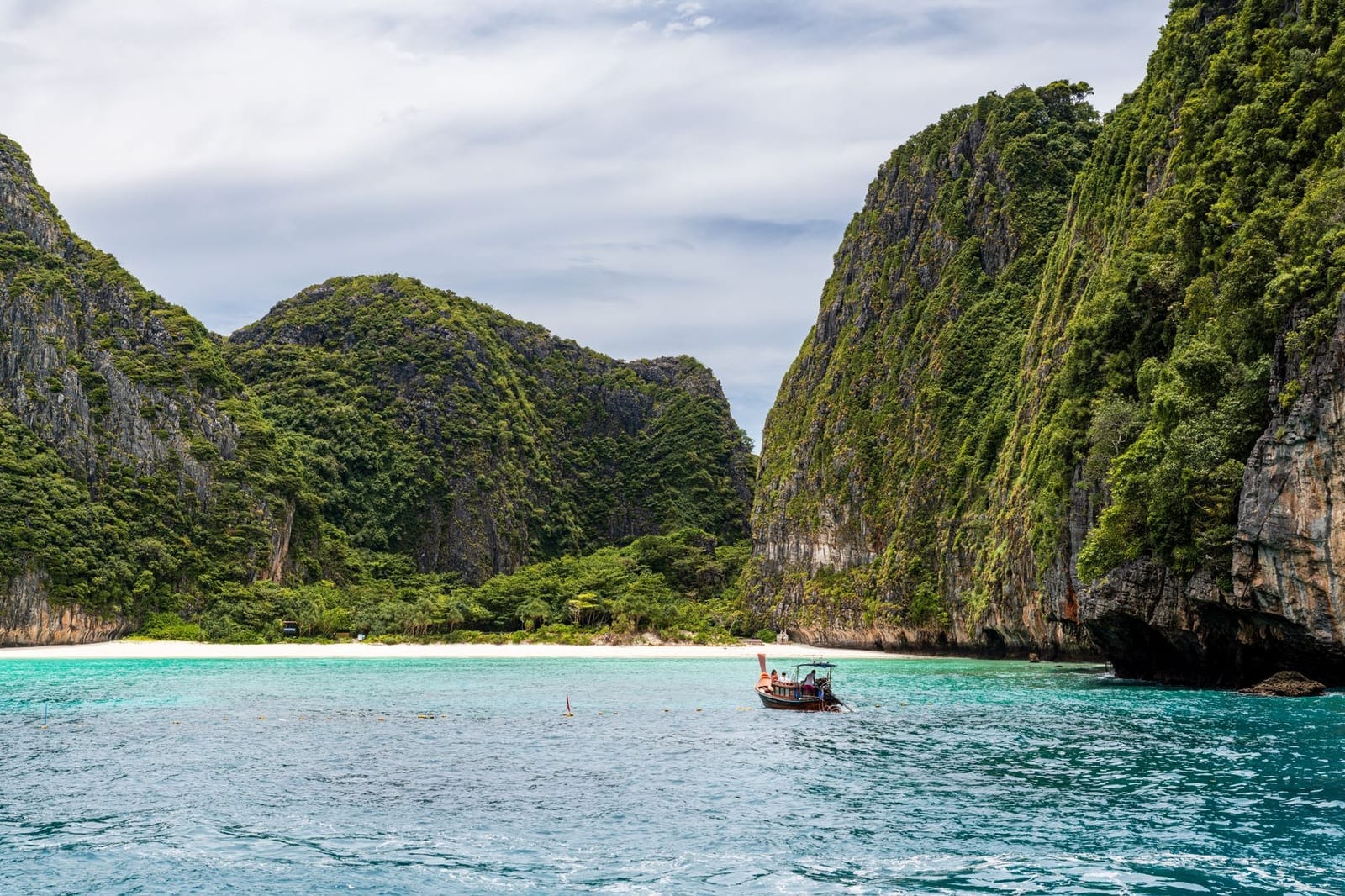
A 30-day stay leaves plenty of room for day trips. Our Phi Phi and Maya Bay speedboat tour takes about 8.5 hours from a Phuket hotel and starts from $75 per person. The visa rules do not change what we sell, but they do change how many days you have, so book the boat days early in your trip and keep the last days for spare time in case of rough seas.
Where to check before you fly
Rules like these can change again, and the legal text is in the Royal Gazette. The most useful checks are your own Thai embassy or consulate website, which states the rule for your passport; the Ministry of Foreign Affairs' e-Visa site if you need a visa; and TAT's newsroom for summaries. Do the check once when you book your flight and once in the week before you leave.
Keep a note of your entry date, the number of days you are allowed and the date by which you must leave. If you are unsure, ask the embassy before you pay for flights, not at the airport. Our national park fees guide covers the costs you pay once you are here.
Practical checklist
- Check your passport's country on your own Thai embassy page, not on a forum or an old blog.
- Count 30 days from your entry date, or 15 if you hold a Seychelles or Mauritius passport.
- If you plan to cross land borders, check the limit of two entries per calendar year.
- Apply for a visa in advance if you want to work, or stay longer than the exemption allows.
- File the free Thailand Digital Arrival Card within 3 days before you land.
- Keep proof of onward travel and of funds (10,000 baht per person) on your phone for the immigration desk.
Questions and answers
Is the 60-day visa exemption for Thailand still valid?
No. TAT reported that it ended on 15 September 2026, when new 30-day and 15-day exemptions replaced it. The Ministry of Interior's announcements were published in the Royal Gazette on 31 August 2026.
Do British tourists need a visa for Thailand in 2026?
Not for a tourist stay of up to 30 days. The Royal Thai Embassy in London says that, from 15 September 2026, British and Irish passport holders can enter without a visa for up to 30 days for tourism.
How many times can you use the Thailand visa exemption in a year?
TAT says the 30-day exemption at land-border checkpoints is generally limited to two entries per calendar year, except for nationals of four ASEAN neighbours, among them Malaysia, Brunei and Singapore. The London embassy advises a visa for more than two visits.
What is the Thai visa exemption for?
The Royal Thai Embassy in London describes it as being for tourism purposes only. For any other purpose, or a stay longer than the exemption allows, ask the embassy which visa applies; applications are made online through the e-Visa service.
Do you still need the arrival card if you are visa-exempt?
Yes. A Thai consulate's official page says the Thailand Digital Arrival Card is mandatory for every non-Thai visitor, with or without a visa. It is free and is filed within 3 days before arrival.
Can you be asked for proof of money or a ticket out when you arrive?
Yes. The UK Foreign Office says officers may ask for proof of at least 10,000 baht per person or 20,000 per family and evidence of onward or return travel, and that British nationals have been refused entry for failing to show it.