

Short answer
The Blue Temple in Chiang Rai, Wat Rong Suea Ten, is free to enter, and the Chiang Rai Times' August 2026 guide lists it as open daily from 7:00 am to 8:00 pm. Allow 45 to 60 minutes. Cover your shoulders and knees, take your shoes off before the main hall and follow the photo signs. The main building was finished on 22 January 2016, and the temple is one of the stops on our Chiang Rai day trip, where it gets about 30 to 40 minutes.
Is the Blue Temple free, and when is it open?
Yes, it is free to enter. The Chiang Rai Times' practical guide of 20 August 2026 calls the Blue Temple free and says its current visitor details list daily access from 7:00 am to 8:00 pm. Its November 2025 travel guide says entry is free too, and its December 2025 temple-tour guide says admission is often free but advises checking the signs on arrival, as policies can change. Treat the hours as a guide, not a promise.
Free does not mean donations are banned. The Chiang Rai Times says some free sites, including the Blue Temple, may welcome donations, and adds that you should give only if you choose to. Compare that with the White Temple, where The Thaiger reported in November 2025 that foreign visitors pay 200 baht from 1 January 2026. The Blue Temple is the cheaper stop on the road to Chiang Rai's famous trio.
What is the Blue Temple, and who built it?
Wat Rong Suea Ten is a modern temple, and that is the first thing to know. Wikipedia says an abandoned temple with ancient brick remains once stood on the site. The local community started the replacement in 1996, building began on 27 October 2005, and the main building was completed on 22 January 2016, after 11 years. The Chiang Rai Times adds that permission to establish the temple was granted on 21 August 2015.
The final design is by the Chiang Rai artist Phuttha Kabkaew, known as Sala Nok. Wikipedia says he learned his skills from Chalermchai Kositpipat while working on the White Temple, and describes the style as neotraditional Thai art, with ornamented sculpture and vivid imagery. The Chiang Rai Times says the name Rong Suea Ten means ditch of the dancing tiger, from local accounts of tigers leaping across a stream here.
Why is it blue, and what is inside?
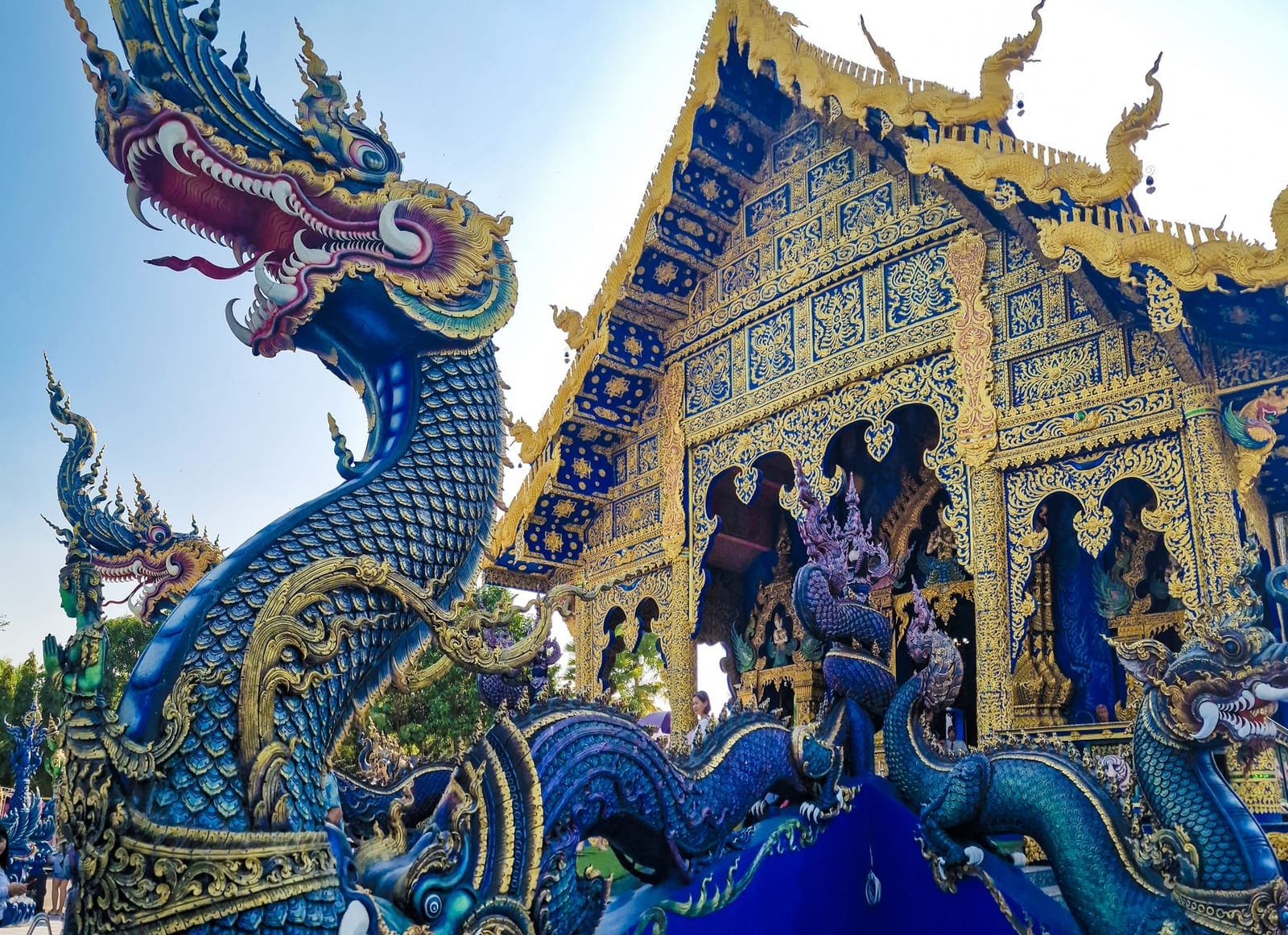
The Chiang Rai Times says the designer used deep blue against gold patterns, a contemporary take on Lanna art, and that many people read the blue as calm and the Dhamma. That is an interpretation, not an official statement. The vihara, the main hall, is 13 metres wide and 48 metres long, according to Wikipedia, and two large nagas stand side by side in front of it.
Inside is a pearl-white Buddha image, called Phra Buddha Ratchamongkol Bodi Trilokanat. Wikipedia gives its lap width as 5 metres and its height as 6.5 metres, and says 88,000 Phra Rod Lamphun statues and many silver and gold rings are buried under it. Relics of the Buddha are placed around the head. Behind the hall stands a large stupa, which the Chiang Rai Times puts at 20 metres, in blue and gold against the sky.
How long do you need, and when is it quietest?
Allow 45 to 60 minutes, according to the Chiang Rai Times' December 2025 temple-tour guide, which calls the mood more compact and less intense than the White Temple. Our programme gives about 30 to 40 minutes, which is enough to see the hall, the nagas and the stupa but not to linger over the murals. If you love detail, tell us before booking, because the day's timings are shaped by the long drive.
The same guide says the temple is busiest from mid-morning to mid-afternoon, when tour buses arrive. Another Chiang Rai Times guide advises going early or late in the day for better light and fewer people, and says the Blue Temple and Wat Huai Pla Kang look different after sunset, when the buildings are lit. A day trip arrives around the busy hours, so expect company; if you stay overnight in Chiang Rai you can choose the quiet end of the day.
What should you wear, and what are the rules inside?
Cover your shoulders and knees. The Chiang Rai Times' temple etiquette guide of December 2025 calls that the simple rule across most temples, says trousers or a skirt below the knee is safest, and notes that hats and sunglasses come off inside worship halls. Our own programme tells guests to take off their shoes before the main hall at the Blue Temple, so wear shoes that slip off easily.
The etiquette guide also asks you to switch the flash off, be ready to stop shooting inside halls, follow posted signs, and keep your feet from pointing at Buddha images or monks. It warns that the busy photo spots at the Blue Temple can make small mistakes more noticeable. We found no official rule on photography inside this hall, so follow the signs and the staff. Our temple etiquette guide explains the habits behind these rules.
Where is it, and how do you get there?
The temple stands on the Kok River in Rim Kok sub-district, Mueang Chiang Rai district, according to the Chiang Rai Times, which calls it only a few kilometres from town and easy to visit after the White Temple. A Tourism Authority of Thailand feature of December 2018 puts it a 10-minute drive from the Night Bazaar area. Wikivoyage's Chiang Rai guide says most of the city, even the Blue Temple, can be explored on foot, and that public transport is mostly tuk-tuks and songthaews.
Wat Huai Pla Kang, with its 69-metre white statue of Guanyin, is in the same sub-district, so the two temples pair easily. If you reach Chiang Rai by Greenbus, the Chiang Mai to Chiang Rai bus guide covers terminals, time and fares. For the other two stops of the famous trio, see our guides to the White Temple fee and the Black House.
White, Blue or Black: how do they differ?
The White Temple is the famous one and the dearest: 200 baht for foreign visitors from 1 January 2026, according to The Thaiger. The Blue Temple is free and, in the Chiang Rai Times' words, calmer and more focused, with strong colour inside. The Black House, a private art museum by Thawan Duchanee, charges an admission fee, which listings give as about 80 baht.
You do not have to choose between them on a day trip, since all three fit one long day. If you only have time for one, the White Temple is the one most visitors come for, while the Blue Temple is the quick, free stop that costs little time. The Black House is not a temple and is not to everyone's taste, because it shows furniture made from animal skins, horns and bones.
How does the Blue Temple fit our Chiang Rai day trip?
Our Chiang Rai temples day trip from Chiang Mai is from $40 per person and lasts about 12 to 13 hours. A van collects you at your hotel at about 7:00 to 7:30 am; the stops are a hot spring, the White Temple, lunch, the Blue Temple and the Black House, and you are back in Chiang Mai at about 7:00 to 8:00 pm. The price covers the hotel transfer, an English-speaking guide, drinking water and accident insurance.
The order and timing of the stops can change with traffic and crowds. About 3 hours each way is on the road, so it suits people who are comfortable with a long drive. Entrance fees are paid on the day unless your quote says otherwise. See the route stop by stop and the tour schedule, and our price guide for the other fees.
Practical checklist
- Check the hours on the day: sources list 7:00 am to 8:00 pm, but they can change.
- Cover your shoulders and knees, and wear shoes you can slip off before the main hall.
- Take your hat and sunglasses off inside the hall, and switch the flash off.
- Allow 45 to 60 minutes on your own, or about 30 to 40 minutes on our day trip.
- Carry small cash in case you want to leave a donation, and give only if you choose.
Questions and answers
Is there an entrance fee for the Blue Temple in Chiang Rai?
No. The Chiang Rai Times' August 2026 guide calls it free to enter, and adds that donations are welcome but never compulsory. Check the signs on arrival, because policies can change.
What time does the Blue Temple open?
The Chiang Rai Times' August 2026 guide lists daily access from 7:00 am to 8:00 pm. It stresses that opening details can change, so check on the day.
Why is the Blue Temple blue?
The Chiang Rai Times says the designer used deep blue against gold, a modern take on Lanna art, and that many see the blue as calm and the Dhamma. It is an interpretation, not an official explanation.
Who built the Blue Temple?
Phuttha Kabkaew, known as Sala Nok, designed it. Wikipedia says he learned from Chalermchai Kositpipat at the White Temple. Building began on 27 October 2005 and the main hall was completed on 22 January 2016.
How long should you spend at the Blue Temple?
The Chiang Rai Times suggests 45 to 60 minutes. On our Chiang Rai day trip the stop is about 30 to 40 minutes.
Can you take photos inside the Blue Temple?
We found no official rule. The Chiang Rai Times' etiquette guide asks you to follow posted signs, keep the flash off and be ready to stop shooting inside halls.