

Short answer
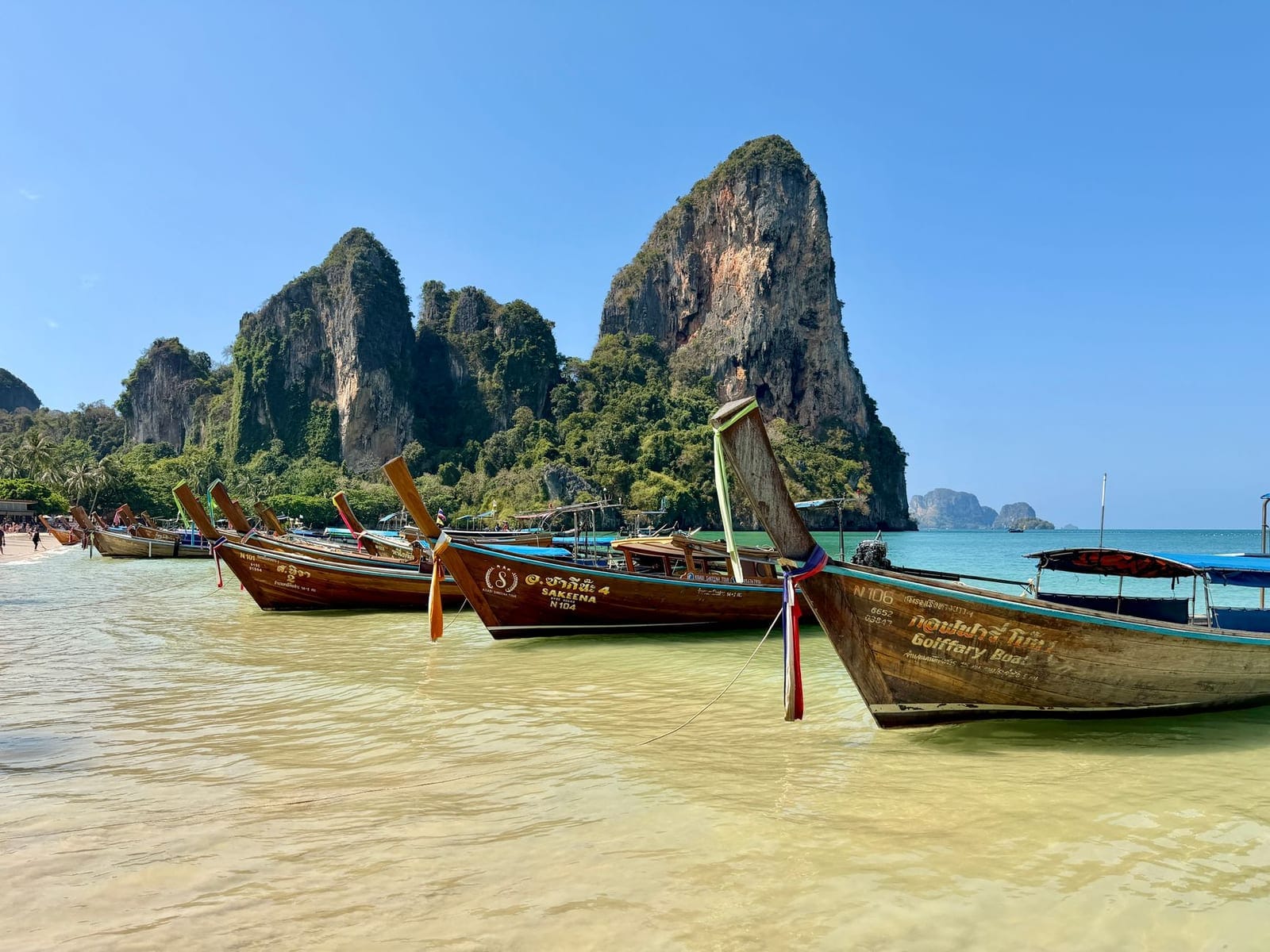
Railay is a peninsula between Ao Nang and Krabi Town, reached only by boat because limestone cliffs cut off the mainland. It has four areas: Railay West, the swimming beach where most longtails from Ao Nang land; Railay East, a mangrove shore with restaurants; Phra Nang Beach at the southern tip; and Tonsai, for climbers. The longtail from Ao Nang takes 10 to 15 minutes and costs about 100 baht each way, with boats leaving when full. There are no cars on the peninsula.
Railay is four areas on one peninsula, not one beach
Railay, also written Rai Leh, is a small peninsula between Krabi Town and Ao Nang. Wikipedia says high limestone cliffs cut it off, so you can reach it only by boat. The cliffs attract climbers from around the world, but the beaches and the quiet atmosphere draw everyone else. Wikipedia names four main areas: Railay West, Railay East, Phra Nang and Ton Sai, and Phuket 101 notes that short alleys join the first three.
That matters when you plan, because the beach people photograph, the one you swim from and the one you sleep near are not the same. Wikipedia says tourism began here in the 1970s with backpackers and hippies, and that the area was not severely affected by the tsunami of 26 December 2004. Wikivoyage adds that there are no cars: it calls the village a pedestrian's dream, and says the paths are too bumpy for bicycles.
Railay West: the swimming beach and the sunset
Railay West is the main beach for visitors. Wikipedia says it is flanked by high limestone cliffs, with a short promenade of restaurants and shops, and Phuket 101 says it is where your boat from Ao Nang drops you, on a vast beach of soft sand with hotels, bars and restaurants along it. Wikivoyage says the north end is great for swimming, while the south end is a little rocky under the water.
Come for the light more than the food. Phuket 101 says not to expect local Thai food here, because it is quite average, and that service can be slow. Wikivoyage says the beach is especially beautiful after sunset, when the cliffs stand out in silhouette. Phuket 101's Ao Nang page recommends a boat to Railay West at sunset as an evening outing for Ao Nang visitors, though you should check the last boat back.
Railay East and Tonsai: where you eat, sleep or climb
Railay East is not a beach for swimming. Wikipedia says it is covered in dense mangroves and unsuitable for swimming, with a boardwalk of restaurants and bars at its northern end, and Phuket 101 describes mud, mangroves and a narrow concrete path. It is the docking point for boats from Krabi Town, according to Wikipedia. Lower-priced resorts are here, and the walk across to Railay West is short.
Tonsai is the climbers' cove. Wikivoyage describes it as a place where climbers and backpackers hang out in cheap accommodation, around the corner from Railay West and linked by a longer hike through the jungle. Wikipedia says Tonsai is more rustic than the glitz of West Railay. A separate attraction on the trail towards Tonsai is Diamond Cave, which Wikipedia says has a walkway into its depths, and Wikivoyage says charges a nominal entrance fee.
Getting there: the longtail from Ao Nang
Take a longtail from the beach at Ao Nang. Wikivoyage's page on Ao Nang says boats leave constantly from the east end of the beach and quotes 80 baht per person in the day and 100 after 18:00, with no pier, so expect wet feet. Phuket 101, updated in March 2025, gives 200 baht return and says boats leave when ten passengers are on board. The trip takes 10 to 15 minutes, according to Wikivoyage and Wikipedia.
Prices change, so ask at the ticket booth. Wikivoyage advises a waterproof bag for electronics and notes that a longtail from Ao Nang runs in all seasons, subject to the weather. In the monsoon season, from May to October, it recommends going from Ao Nammao instead. Andaman Wave Master adds that Railay East has no pier structure, so passengers board by longtail transfer or floating pontoon, depending on the tide.
Day trip or stay the night?
A day trip is enough to see the beaches. Phuket 101 says many visitors come for the day, but that overnight stays at several hotels and guesthouses are possible and give you the beaches without the day-trip crowds. Staying also lets you walk to Phra Nang early. Thai Holiday Guide says day boats stack up on that beach between about 11 am and 3 pm, so a morning or evening there is a different experience.
If you stay, accommodation ranges widely. Wikipedia says East Railay has bungalows and mid-priced resorts, West Railay has a collection of luxury resorts, and one resort, Rayavadee, spans both waterfronts. Wikivoyage says West Railay is mid-range to high-end. There are small shops, clinics and ATMs, according to Phuket 101, but Wikivoyage warns there are no real grocery vendors, so most meals are in restaurants.
What to do: climbing, kayaks, swimming and the glow
Climbing is the main activity. Wikivoyage says Railay is perhaps the best winter sport-climbing area in the world, with over 700 bolted routes, and Andaman Wave Master says more than 600; counts differ. Phuket 101 says the schools are well equipped and affordable. Wikivoyage warns that bolts near the sea can corrode, so choose a reputable school. You can also rent kayaks and paddleboards on the beaches, according to Phuket 101.
Snorkelling is not a major draw. Wikivoyage says the coral and sea life here are not as diverse as at other Thai areas, and suggests the islands to the south and west instead. It also mentions swimming at night, when bioluminescence lights up disturbed water on dark nights, a note updated in November 2022. Our plankton guide explains why a sighting cannot be promised.
How our Krabi tours touch Railay
Railay is not a stop of its own on our tours, but it is close to both. Our Krabi 4 Islands speedboat tour, from $35 per person, starts at Phra Nang Cave Beach at the tip of the peninsula, then crosses to the sandbar and Poda Island. Railay and Tonsai guests are collected from the beach, not from a hotel, and the tour is back at about 2:00 pm. The national park fee, 200 baht per adult and 100 per child, is paid in cash at check-in.
Our Krabi 7 Islands sunset tour, from $40, calls at Railay to collect more guests, and Railay guests meet the boat at Railay or at the pier, confirmed with the booking. If you only want Railay for a day, a longtail is cheaper. If you want Poda, the sandbar and Chicken Island too, a tour does it in one go. See Ao Nang or Railay for where to stay, and Phra Nang Cave Beach.
Practical checklist
- Decide your base: Railay West for swimming, Railay East for cheaper rooms, Tonsai for climbing.
- Take cash for the longtail, about 100 baht each way, and ask at the booth for the current fare.
- Pack a waterproof bag, as you may wade ashore at Ao Nang.
- Walk to Phra Nang before 11 am or after 3 pm to miss the day boats.
- Check the last boat back to Ao Nang before you stay for the sunset.
- In May to October, expect rougher seas and ask about leaving from Ao Nammao.
Questions and answers
How do you get to Railay Beach from Ao Nang?
By longtail boat from the beach at Ao Nang, 10 to 15 minutes, at about 100 baht each way according to older Wikivoyage notes and 200 baht return according to Phuket 101 in 2025. Boats leave when full.
Which Railay beach is best for swimming?
Railay West and Phra Nang. Wikipedia calls West Railay the primary destination for beach-goers, while Railay East is mangrove and unsuitable for swimming.
Can you walk to Railay?
Not from the mainland. Wikipedia says cliffs cut it off, so the only access is by boat. Once there, the beaches are joined by short paths and there are no cars.
Is Railay worth a day trip or an overnight stay?
Both work. Phuket 101 says many visit for the day, and that staying overnight gives you the beaches without the crowds. Day boats crowd Phra Nang from about 11 am to 3 pm.
Does Railay have good snorkelling?
Not especially. Wikivoyage says the coral and sea life are less diverse than at other Thai areas, and suggests the islands to the south and west.
Are there ATMs and shops on Railay?
Yes. Phuket 101 mentions convenience stores, clinics and ATMs. Wikivoyage says there are no real grocery vendors, so most meals are in restaurants.