

Short answer
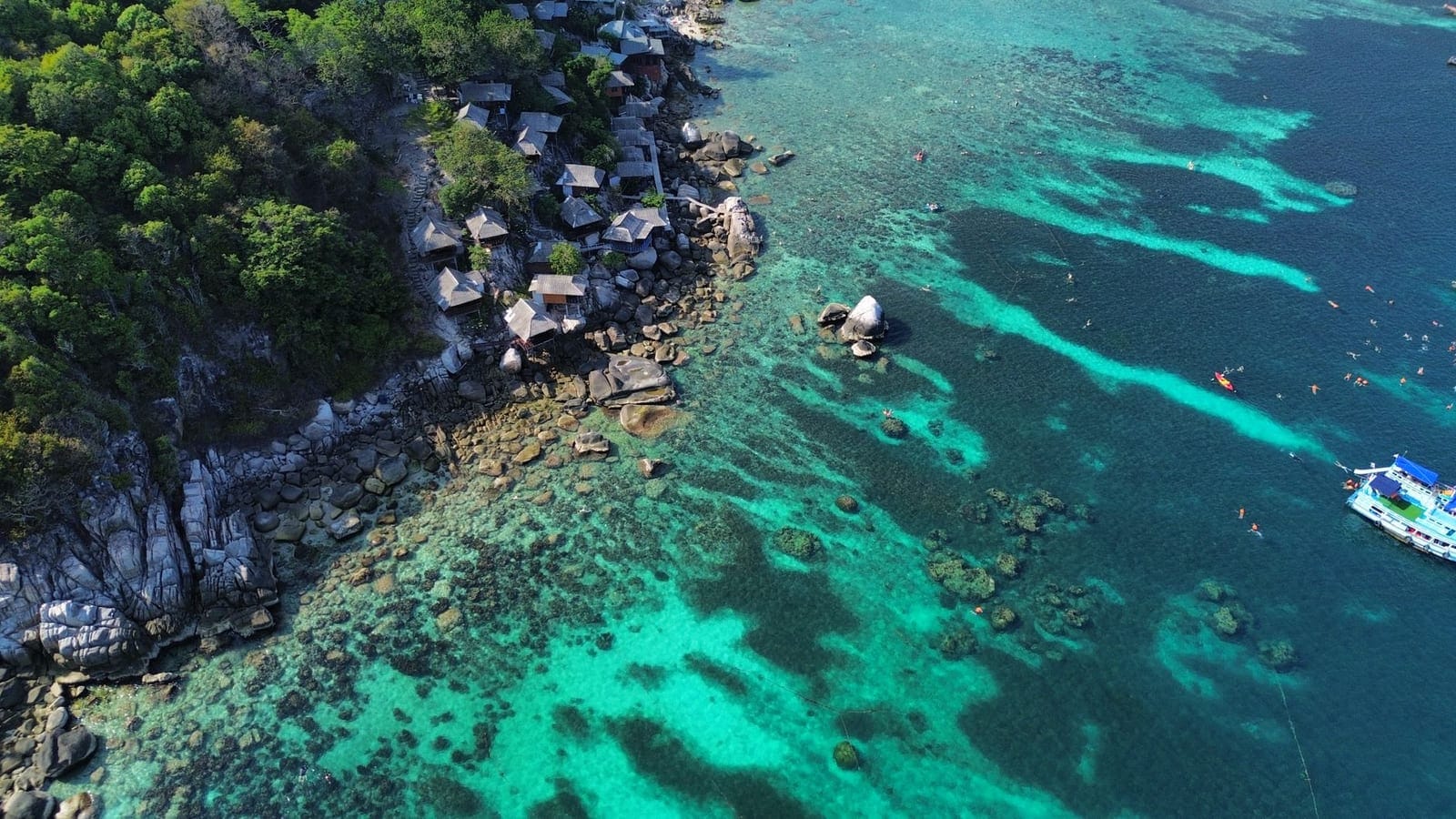
The best-known Koh Tao snorkeling spots are the bays around the island, such as Mango Bay, Hin Wong Bay and Lighthouse Bay, and the Japanese Gardens reef at Koh Nang Yuan. Wikipedia counts over 130 species of hard coral and 223 species of reef fish around the island. Nang Yuan charges 250 baht per person and admits day visitors from 10 am to 3 pm, according to its own website. Water is clearest outside the wet months. Our Samui day trip, from $55 per person, visits one bay and then Nang Yuan.
Why Koh Tao is better for snorkelling than Samui
Koh Tao is a small island with clear water close to shore. Wikipedia says it covers about 21 square kilometres, that its economy centres on tourism and especially diving, and that its reefs hold over 130 species of hard coral and over 223 species of reef fish. Wikivoyage's Ko Tao guide gives average visibility of around 15 to 20 metres, and says it can exceed 40 metres, though that figure is written for divers and November is the exception.
Samui is a different story. Wikivoyage says snorkelling directly off Samui is generally mediocre, because the shallow bays and sandy beaches cause silt and poor visibility, and names Koh Tao and Ang Thong as the places with clear water. That is why Samui visitors take a boat. Our guide to Ang Thong or Pig Island compares the two other boat days from Samui.
Mango Bay, Hin Wong Bay and Lighthouse Bay
On our Koh Tao day the speedboat stops at one of three bays: Mango Bay, Hin Wong Bay or Lighthouse Bay. The crew chooses for the sea and the season, so you cannot pick in advance. Wikivoyage lists all three among Koh Tao's dive locations, and names Mango Bay and Hin Wong Bay among the good day excursions reached by road or by boat.
Reaching the bays on your own is harder than it looks. Wikivoyage says some roads, for example to Mango Bay, may be in a condition that needs a dirt bike or a car, and that some bays are reached only by a paid longtail boat. Wikipedia says motorbikes are the main form of transport and the main cause of injury to tourists on Koh Tao. For a first visit, a boat that takes you straight to the bay is the simpler way.
Koh Nang Yuan and the Japanese Gardens
Koh Nang Yuan, three small islands joined by a sandbar, is the other half of the day. The island's own website says the Japanese Gardens is one of the most popular snorkelling areas, with clear, warm water and fish close to shore, and that Twins Bay offers a different reef. Day visitors are admitted from 10 AM to 3 PM, and the entrance fee is 250 baht per person, paid on arrival. TAT's 2017 newsroom piece calls Nang Yuan a perfect place for day trips and snorkelling.
The same website says blacktip reef sharks may be seen close to the beaches around 07:00 and 17:30 and usually move on before the first ferries arrive, so a day visitor should not count on seeing them. The rules are strict: no single-use plastic bottles, no fins when snorkelling, no drones, reef-safe sunscreen only, and no touching marine life or stepping on coral. On our tour you spend about 2.5 hours on Nang Yuan.
Shark Bay, Freedom Beach and other spots on your own
If you stay on Koh Tao you can try more places. Wikivoyage's Ko Tao guide says Shark Bay is a good place to snorkel for the day, with only small blacktip reef sharks that are harmless to humans, and lists Freedom Beach, Laem Thian, Mango Bay, Hin Wong Bay and Tanote Bay as good day excursions by road or boat. The guide is undated, so check current access and any charges locally.
Wikivoyage also says that some beaches are reached only by private roads that charge 100 to 200 baht, that short longtail trips cost 100 to 200 baht, and that a round-island longtail can be as much as 2,000 baht. Treat these as older figures. The Nang Yuan website says a taxi boat from Mae Haad or Sairee takes about 20 minutes, with round-trip prices usually 300 to 600 baht per person.
When is the water clearest?
Season matters more than the spot. Wikivoyage says nearly any time of year except November is good in Koh Tao, and that in November visibility drops to around 5 metres and the seas are choppy. The Nang Yuan website says the high season from December to April brings excellent visibility but heavy crowds, and that blacktip reef sharks visit the island each morning in June, July and August.
The crossing from Samui follows the same pattern. The notes for our tour say the sea can be bumpy in wind and swell, mostly in the wetter months from late October to December, and on our tour the operator moves the trip to another date or refunds it if the sea is unsafe. Wikipedia, citing Thai Meteorological Department data, puts the heaviest Samui rain from mid October to early December. If clear water is the reason you are going, aim outside those weeks.
Reef rules and what to bring
Koh Tao's reefs carry a heavy load. Wikipedia says over-use of some areas has increased corallivores such as Drupella snails and crown-of-thorns starfish, and that a Marine Zoning and Regulations Master Plan became local law in 2012, with its effects still to be seen when the article was written. Wikivoyage's advice is short: avoid contact with coral reefs. Wear the life jacket, keep your feet off the reef and leave the fins at home on Nang Yuan.
Bring reef-safe sunscreen, a reusable water bottle, a towel, swimwear and sunglasses, as the notes for our tour advise. Bring cash too: the Nang Yuan website says there are no ATMs on the island, and the entrance fee is paid on arrival. Our guide to the Koh Nang Yuan entrance fee and rules has the full list.
How our day trip from Samui fits
Our Koh Tao and Nang Yuan day trip is from $55 per person. After hotel pickup between about 7:30 and 8:30 am, the speedboat leaves a pier in the north of Samui at about 9:00 and reaches Koh Tao at about 10:00 to 10:30 for the bay stop. Lunch ashore is at about 12:00, and then comes Nang Yuan: the sandbar beach, the 15 to 20 minute viewpoint climb and the Japanese Gardens. The boat leaves at about 3:00 pm.
On our tour the price includes the transfers, speedboat and guide, a Thai-style lunch, drinking water and soft drinks, mask, snorkel and life jacket, and accident insurance. Island entrance fees are paid in cash: 250 baht per adult and 120 per child. It is not suitable for guests with back problems or heart conditions, or for pregnant women. If you want to dive or stay longer, take the public ferry and stay on the island.
Practical checklist
- Choose your date outside the November weeks of poor visibility and rough crossings, if clear water is the point.
- Pack reef-safe sunscreen, a towel, sunglasses, a reusable bottle and shoes with grip for the viewpoint.
- Keep cash for the Nang Yuan entrance fee: 250 baht per person, with no ATMs on the island.
- Leave the fins at home for Nang Yuan: fins are not allowed when snorkelling there.
- Keep your feet and hands off the coral, and stay in the life jacket if you are not a confident swimmer.
Questions and answers
Which bay is best for snorkelling on Koh Tao?
There is no single best bay. Wikivoyage names Shark Bay, Mango Bay, Hin Wong Bay, Freedom Beach, Laem Thian and Tanote Bay as good excursions, and our tour stops at one of Mango Bay, Hin Wong Bay or Lighthouse Bay, chosen for the sea.
Can you snorkel at Koh Nang Yuan?
Yes. The island's website calls the Japanese Gardens one of its most popular snorkelling areas. Fins are not allowed, and day visitors can enter from 10 am to 3 pm for 250 baht per person.
Will I see sharks while snorkelling on Koh Tao?
Possibly small blacktip reef sharks. Wikivoyage calls the ones at Shark Bay harmless to humans, and the Nang Yuan website says they are seen near its beaches around 07:00 and 17:30, usually before the first ferries.
Is November a bad month for snorkelling on Koh Tao?
Wikivoyage says visibility drops to around 5 metres and the seas are choppy in November, and the notes for our tour say crossings are roughest from late October to December. Plan a spare day if you travel then.
Do I need my own snorkelling gear on the day trip?
No. On our tour a mask, snorkel and life jacket are included. Bring reef-safe sunscreen, a towel and swimwear, and cash for the island entrance fees.
Is Samui itself good for snorkelling?
Wikivoyage says snorkelling directly off Samui is generally mediocre because of silt and poor visibility, and points to Koh Tao and Ang Thong for clearer water.