

Short answer
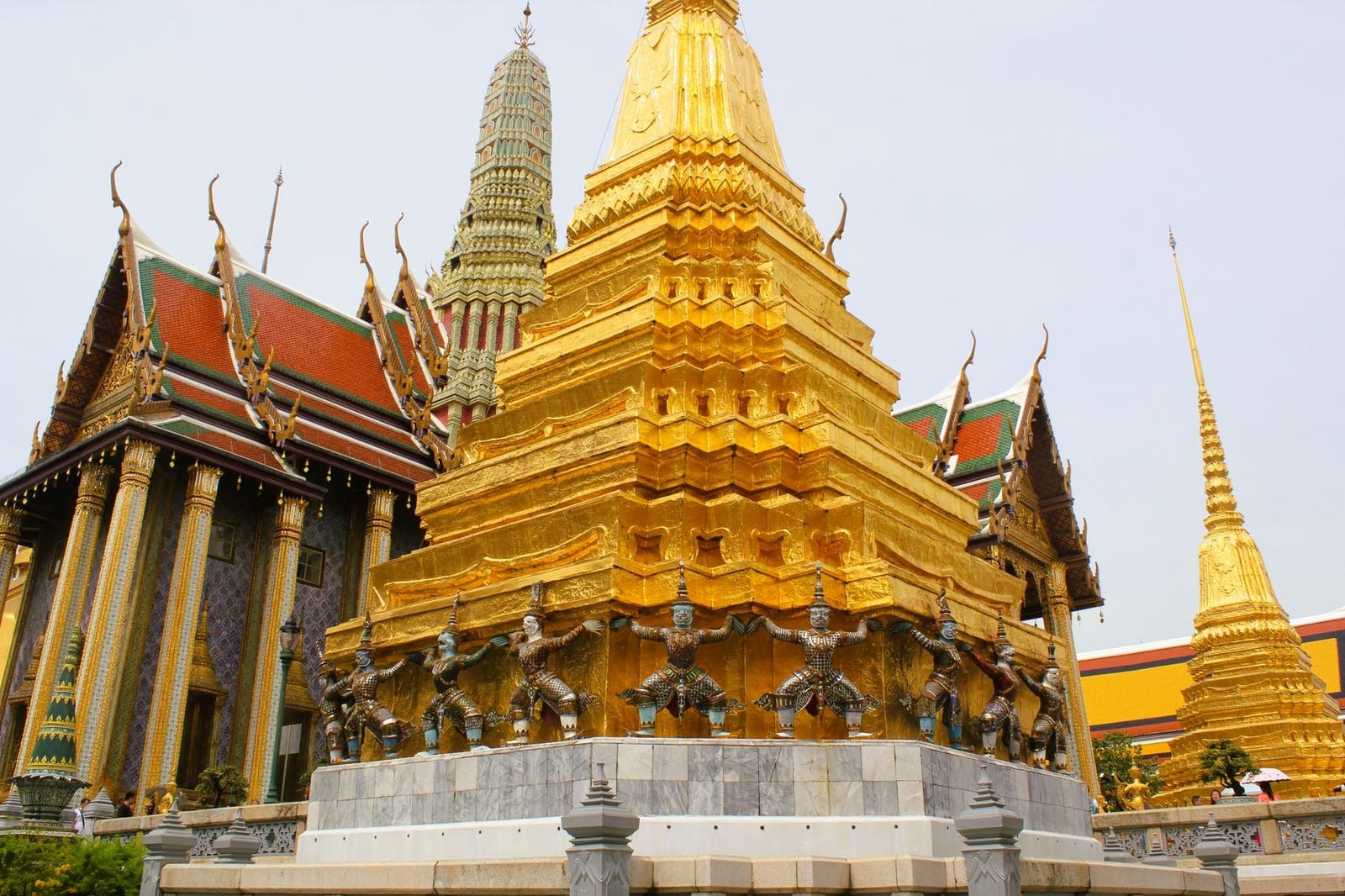
The best temples in Bangkok for a first visit are the three beside the Chao Phraya River: the Grand Palace with Wat Phra Kaew (500 baht), Wat Pho (300 baht) and Wat Arun (200 baht). Together they cost 1,000 baht in tickets and fit one morning. For a second day, the strongest picks are Wat Saket and its Golden Mount, Wat Suthat with the Giant Swing, Wat Ratchanatdaram, Wat Benchamabophit and Wat Traimit. Cover your shoulders and knees at all of them, and check opening hours on the day.
Start with the three on the river
Wikivoyage's Rattanakosin guide names the Grand Palace, Wat Pho and Wat Arun as the top three and notes that they are conveniently clustered. The Grand Palace includes Wat Phra Kaew, which Wikipedia calls the most sacred Buddhist temple in Thailand and which houses the Emerald Buddha. The palace charges foreigners 500 baht, and the ticket also covers Wat Phra Kaew, according to its official page.
Wat Pho is next door. It holds the 46-metre Reclining Buddha, and its own visit plan gives 300 baht and hours from 08:00 to 19:30. Wat Arun is across the river and costs 200 baht for foreigners, according to Wikipedia (as of March 2024). Our guides cover each in detail: the Wat Pho fee and the Wat Arun fee and ferry. The three tickets together come to 1,000 baht.
Wat Saket and Wat Suthat: the old town east of the palace
Wat Saket is known for the Golden Mount, a steep artificial hill that Wikipedia says grew from a chedi that collapsed in the reign of Rama III because the soft Bangkok soil could not carry it. Wikivoyage lists 318 steps to the top, opening from 08:00 to 21:00 and 100 baht (page updated December 2023). Wikipedia adds that an annual festival with a candlelight procession is held there every November.
Wat Suthat stands in front of the Giant Swing, a red frame 21.15 metres tall, according to Wikipedia, which says the swing ceremony ended in 1935 after several fatal accidents. Wikipedia also says the temple enshrines the Phra Si Sakyamuni Buddha image, brought from Sukhothai. A Thai government visitor page dated 15 August 2025 lists it as open daily from 08:30 to 16:00, at 100 baht for foreigners, with a separate 200 baht museum open Friday to Sunday. Wikivoyage lists much longer hours, so check at the gate.
Three more for a second day
Wat Ratchanatdaram, known as Loha Prasat, the iron palace, has 37 metallic spires, which Wikivoyage says stand for the 37 virtues towards enlightenment, and Wikipedia says the structure was opened to the public in 2007. Wikivoyage lists it as open daily from 08:00 to 17:00 and free, though that page is undated. Wikivoyage lists it at the same pier as Wat Suthat, Panfa Leelard, so the two combine easily.
Wat Benchamabophit, the Marble Temple in Dusit, was begun in 1899, and Wikipedia says it is built of Italian marble and appears on the back of the five-baht coin. The government visitor page lists Monday to Saturday from 08:00 to 17:00 and Sunday and public holidays from 10:00 to 17:00, at 50 baht for foreigners. Wat Traimit in Chinatown houses a solid-gold Buddha that Wikipedia says was found in 1955 when a plaster-covered statue was dropped; Wikivoyage gives 08:00 to 17:00 and a small fee, undated.
What a temple day costs
For a first morning you pay 1,000 baht for the three river temples, as above. A second day adds roughly 100 baht each for Wat Saket and Wat Suthat and 50 baht for Wat Benchamabophit, on Wikivoyage's dated and the government page's figures, and small or no fees at the others, on Wikivoyage's undated ones. These are not temple tariffs, and Wat Arun shows how fast figures move: the Tourism Authority of Thailand announced a rise from 50 to 100 baht in 2020, and Wikipedia gave 200 baht in March 2024.
Our guide to the Grand Palace tour price shows what each of the three tickets costs at the gate and how they fold into one tour price. Wikivoyage adds that an English-speaking guide at Wat Pho can be arranged for around 200 to 400 baht, depending on group size, an undated figure, so treat it as a rough guide only.
What to wear in a Bangkok temple
Cover your shoulders and knees at every temple. The Grand Palace's official page bans sleeveless shirts, vests, short or see-through tops, shorts, torn or tight trousers, bike pants, mini skirts and sleeping suits. Wat Pho's visit plan says no shorts, although trousers are permitted, and asks visitors to take off their shoes before religious buildings. Wikivoyage says the same standard applies to all temples, with no shorts, no flip-flops and no sleeveless shirts.
Choose full-length loose trousers or a long skirt, a sleeved top and shoes that slip off. A light scarf covers your shoulders if the day turns out hotter than your outfit. Wikivoyage mentions that some places rent trousers for a refundable deposit, and that trousers cost 250 to 300 baht in front of the palace, both undated. Our temple etiquette guide and the Grand Palace dress code cover the rest.
Closures, ceremonies and the scam to ignore
A royal ceremony can close the Grand Palace at short notice. The Thaiger reported that the palace and Wat Phra Kaew closed from 26 October to 8 November 2025 for royal merit-making ceremonies, quoting the Bureau of the Royal Household. On 29 October 2026 the palace's calendar listed one date, 28 October 2026, with the palace closing at noon. The Tourism Authority of Thailand says the Royal Barge Procession ends at Wat Arun on 6 November 2026.
Do not accept a stranger's word that a temple is closed. Wikivoyage warns that people who say a temple is shut for a Buddhist holiday often steer visitors into commission-based tuk-tuk rides or shops, and says to check at the entrance. Our guide to the Grand Palace closed scam explains how it works. For emergencies, the Tourist Police hotline is 1155, according to the Tourism Authority of Thailand.
One morning, one day or two: how to choose
With one morning, take the river three. With a full day, add Wat Saket and Wat Suthat in the afternoon, or Wat Benchamabophit early in the morning if you want to see the monks collect alms; Wikipedia says the monks line up between 06:00 and 07:30. Wikivoyage suggests giving the Grand Palace and Wat Pho together a full day because the heat and glare are wearing, so do not stack five temples in one afternoon. See Bangkok in one day and the 3-day itinerary.
Our Grand Palace, Wat Pho and Wat Arun tour costs from $75 per person, includes the three tickets, the ferry and a guide, and runs about 4 hours from about 8:30 am. It does not suit you if you want to stay hours at one temple. For the evening, our night tuk-tuk food tour, from $40, rides past the lit temples without going inside any. Ruins are a different day: see the temples of Ayutthaya.
Practical checklist
- Start with the Grand Palace, Wat Pho and Wat Arun, and budget 1,000 baht for the three tickets if you go alone.
- Dress for the strictest temple: sleeves, full-length trousers or a long skirt, shoes that slip off.
- Check the Grand Palace's online calendar for your date; ceremonies close it without much notice.
- Keep the Golden Mount, Wat Suthat and Wat Benchamabophit for a second day, and confirm their hours and fees at the gate.
- Ignore anyone who says a temple is closed, and check at the entrance.
Questions and answers
What are the best temples in Bangkok for a first visit?
The Grand Palace with Wat Phra Kaew, Wat Pho and Wat Arun. They are close together and cost 500, 300 and 200 baht, 1,000 baht in total. Wikivoyage's Rattanakosin guide calls them the top three.
How many temples can you see in one day?
The three river temples fit one morning on a tour of about 4 hours. Adding Wat Saket and Wat Suthat makes a full day. Wikivoyage warns that the heat and glare are wearing, so do not overpack.
Which Bangkok temple is open latest?
Wat Pho is open until 19:30, according to its own visit plan. Wikivoyage lists Wat Saket as open until 21:00, but that entry is undated, so check at the gate. Most other temples close around 17:00 or 18:00.
Are all Bangkok temples free?
No. The Grand Palace charges 500 baht and Wat Pho 300; Wat Arun's fee is 200 baht for foreigners, according to Wikipedia. A government page dated 15 August 2025 lists 100 baht at Wat Suthat and 50 baht at Wat Benchamabophit, and Wikivoyage lists Wat Ratchanatdaram as free.
What should I wear to visit temples in Bangkok?
Cover your shoulders and knees. The Grand Palace bans sleeveless tops, shorts, tight or torn clothes and mini skirts, and Wat Pho bans shorts. Wear shoes that slip off.
Is there a quiet temple in Bangkok?
Wikivoyage describes Wat Ratchanatdaram as calm after the crowds at the big temples, and lists it as free and open from 08:00 to 17:00. The listing is undated, so confirm the details on the day.