

Short answer
Pick the Damnoen Saduak floating market day for a lighter, shorter outing and the Ayutthaya day for history. Both tours are from $25 per person from a central Bangkok meeting point. The market day takes about 7 hours, includes the longtail boat ride and stops at Maeklong Railway Market. The Ayutthaya day takes about 9 hours and visits four temples in the ruins of Siam's old capital, a UNESCO site since 1991, with about 280 baht of temple tickets paid on the day. You can do both on two days.
The short answer: markets for a lighter day, Ayutthaya for history
Pick the floating market day if you want a shorter, lighter outing with boats, food and a train passing through a market. Pick the Ayutthaya day if you want history and are happy to walk in the sun. Both tours cost from $25 per person and start from a central meeting point in Bangkok near a BTS or MRT station. The market day takes about 7 hours, and the Ayutthaya day about 9.
The extras differ. On the market day the longtail boat ride is included, and lunch and optional hotel pickup are extra. On the Ayutthaya day temple tickets of about 280 baht in total, lunch and optional hotel pickup are extra. Neither is the better day in general; they answer different questions. Our floating market price guide and Ayutthaya price guide cover each in detail.
What you see on each day
The market day has three stops. At Maeklong Railway Market the vendors pull back their awnings and goods when a train comes through the stalls, and put them back once it has passed, as GoAsia describes. Damnoen Saduak Floating Market comes next, about 100 kilometres south-west of Bangkok and, in Wikipedia's words, often considered the most famous floating market. The last stop is Wat Bang Kung, the chapel wrapped in the roots of a banyan tree.
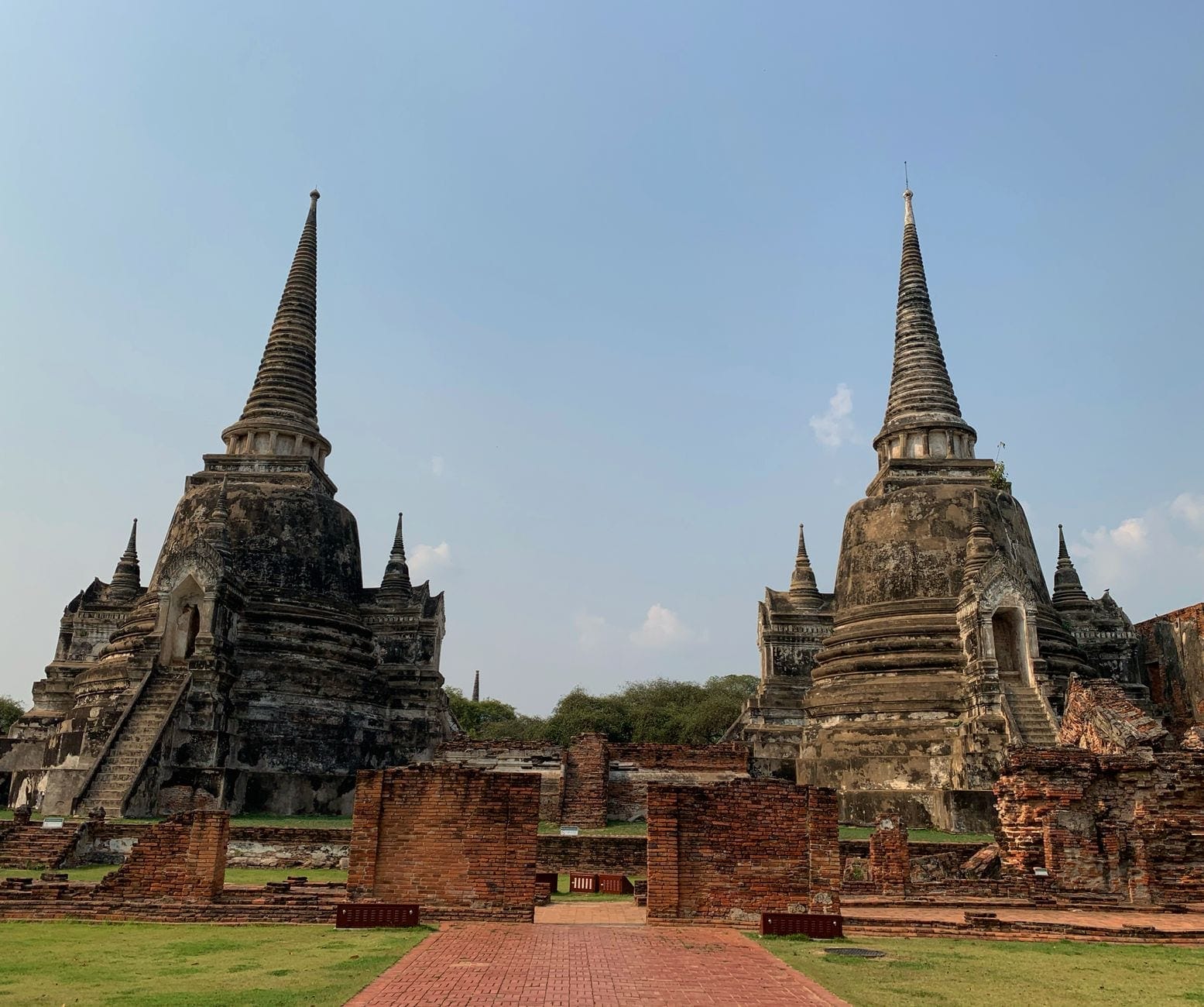
The Ayutthaya day is built around four temples: Wat Yai Chai Mongkhon, Wat Mahathat with the Buddha head in the tree roots, Wat Phra Si Sanphet with Wihan Phra Mongkhon Bophit, and Wat Chaiwatthanaram. UNESCO lists the Historic City of Ayutthaya, inscribed in 1991, and says it was founded in 1350 as the second capital of Siam, flourished from the 14th to the 18th centuries and was destroyed by the Burmese in the 18th century. The remains are marked by prang towers and large monasteries.
Start times and how each day is timed
Both tours start in the morning from the meeting point in Bangkok, and we confirm the exact time with each booking. The market day is timed to the train at Maeklong, so its start follows the railway timetable and depends on the date. GoAsia counts eight trains a day through the market. The drive is about 1.5 hours in each case, south-west for the markets and north for Ayutthaya.
The sites keep their own hours. Damnoen Saduak is a morning market: Wikipedia says it is usually busiest from 07:00 to 09:00 and active until noon. Ayutthaya Historical Park is open daily from 8:00 am to 6:00 pm, according to the Fine Arts Department, so the temple day is not tied to a morning cut-off in the way the market is. Our Maeklong guide explains the train times in detail.
Price and extras side by side
The headline price is the same, from $25 per person, but the Ayutthaya day is two hours longer. Each price covers transport from the meeting point and back, an English-speaking guide and drinking water; the market day adds the longtail boat ride. Lunch is paid by you on both days. Hotel pickup in central Bangkok is possible at extra cost on both, and the base price is for the meeting point.
The difference is tickets. Browsing Damnoen Saduak market on foot costs nothing, according to GoAsia's guide updated on 26 October 2026. At Ayutthaya the Fine Arts Department charges foreign visitors 80 baht for each monument, or 300 baht for a flat-rate ticket. On our route, our tour information puts the tickets at about 40 to 80 baht per temple, around 280 baht in total, paid on the day.
Heat, walking and weather
Both days are mostly outdoors. Our Ayutthaya information says it is hot with a lot of walking in the sun, and that temples expect covered shoulders and knees. The market day is walking through busy markets and a boat ride, and it runs rain or shine, with a light rain jacket advised in the rainy season. Wikipedia gives Ayutthaya a hot season from March to May and a rainy season from June to October.
As of late October 2026 the cool season is beginning: Wikipedia's article on Thailand's geography puts it for Bangkok from mid-October to mid-February. Those months are the most comfortable for either day, and the best choice if you are sensitive to heat. If you travel in the hot months, the shorter market day is the lighter commitment.
Who should pick which
The market day suits first-time visitors who want a shorter, lighter day, families, and anyone who likes food, boats and photographs. Our floating market tour lists a reduced price for children aged 3 to 11. It suits you less if you want a quiet or authentic market: Wikipedia says Damnoen Saduak is crowded and has been noted to lack cultural authenticity, although it remains popular.
The Ayutthaya day suits people who care about history, architecture and photographing ruins, and who can cope with a long day and the heat. It is a weaker choice if you dislike walking in the sun or long days. If you are weighing it against doing Ayutthaya yourself, our train or tour comparison sets out the cost and the time for both.
Can you do both? Two days, two bookings
Yes. The two are separate day tours that run in opposite directions from Bangkok, south-west for the markets and north for Ayutthaya, and each takes most of a day: about 7 hours and about 9. They cannot sensibly be done on the same day, so book them on two different dates, and put the shorter market day on the day you want to take it easier.
To book, send us both dates, the number of guests and whether you want hotel pickup on WhatsApp. We confirm availability, the meeting time and the total for each day before you pay, and how and when to pay is agreed with your booking. Both tours have their own why-book and schedule articles: start with the market tour schedule or the Ayutthaya schedule.
Practical checklist
- Decide first: lighter day with boats and a train, or a longer day among temples.
- Send us the date or dates, the number of guests and any hotel pickup request on WhatsApp.
- For Ayutthaya, keep about 280 baht in cash for temple tickets, and cover shoulders and knees.
- For the market day, bring cash for lunch and snacks and a light rain jacket in the rainy season.
- If you want both, book two separate days and ask us to confirm both meeting times.
Questions and answers
Which is better, the floating market or Ayutthaya?
Neither in general. The floating market day is shorter, about 7 hours, with a boat ride and a train passing through a market. The Ayutthaya day is about 9 hours among UNESCO-listed ruins. Both are from $25 per person.
Which day trip costs more in total?
The tour prices are both from $25 per person, but Ayutthaya adds about 280 baht of temple tickets on the day. The market day includes the boat ride. Lunch is paid by you on both.
Which is better with children?
The floating market tour lists a reduced price for children aged 3 to 11, and the day is shorter. Ayutthaya is a longer day with a lot of walking in the sun. Ask us on WhatsApp about children on either.
Can you do both in one day?
No. They are separate tours in opposite directions from Bangkok, of about 7 and 9 hours. Book them on two different days.
Which is hotter?
Both are outdoors. Our Ayutthaya information describes a hot day with a lot of walking in the sun, while the market day includes a boat ride and markets. The cool season from November to February suits both.